
Last updated November 22, 2026
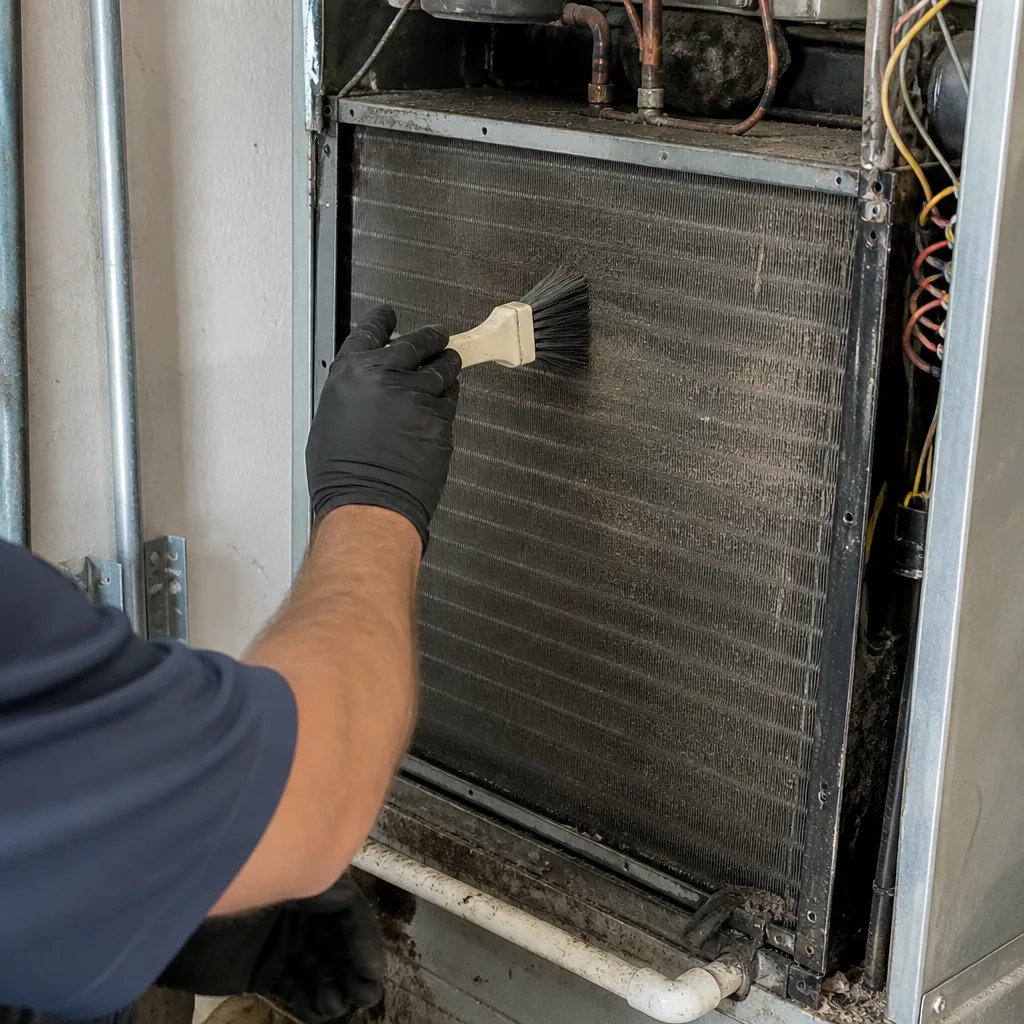
 Whole-home duct cleaning
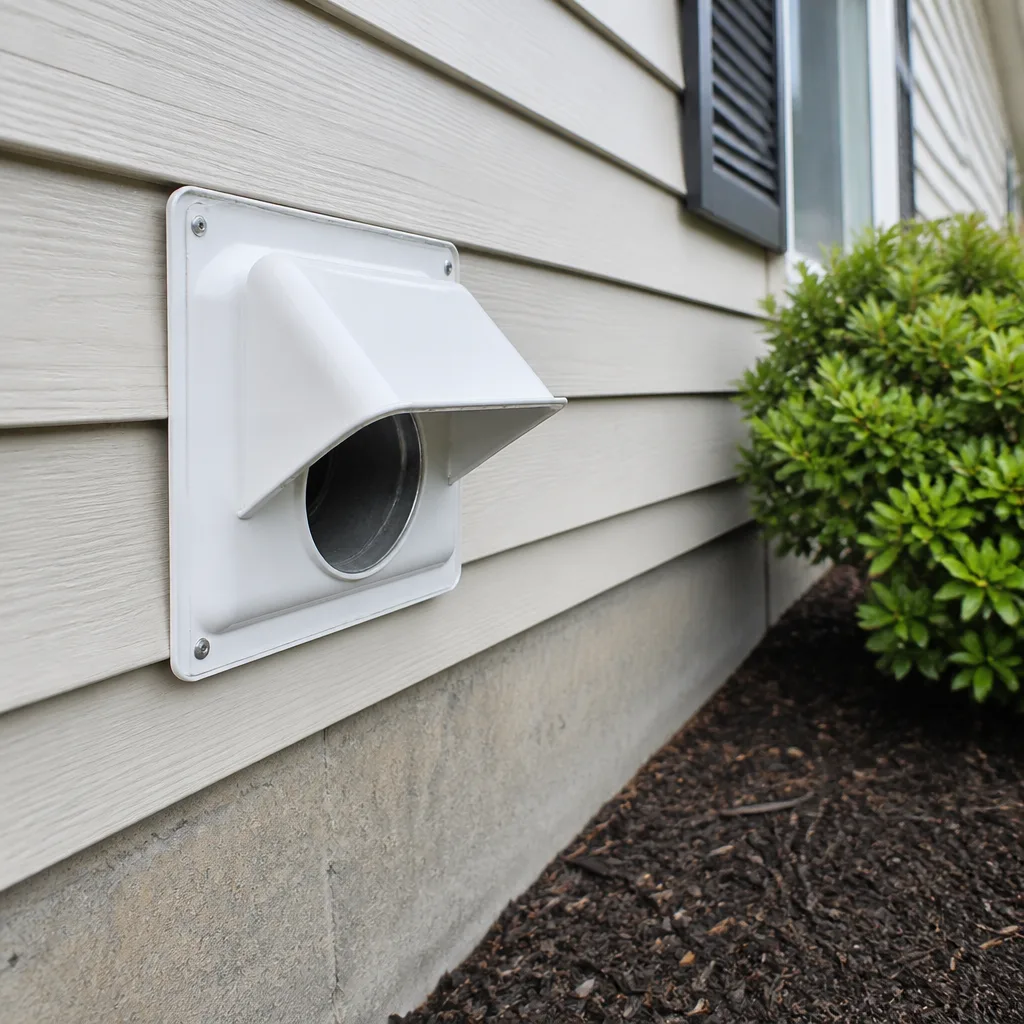 Dryer vent cleaning
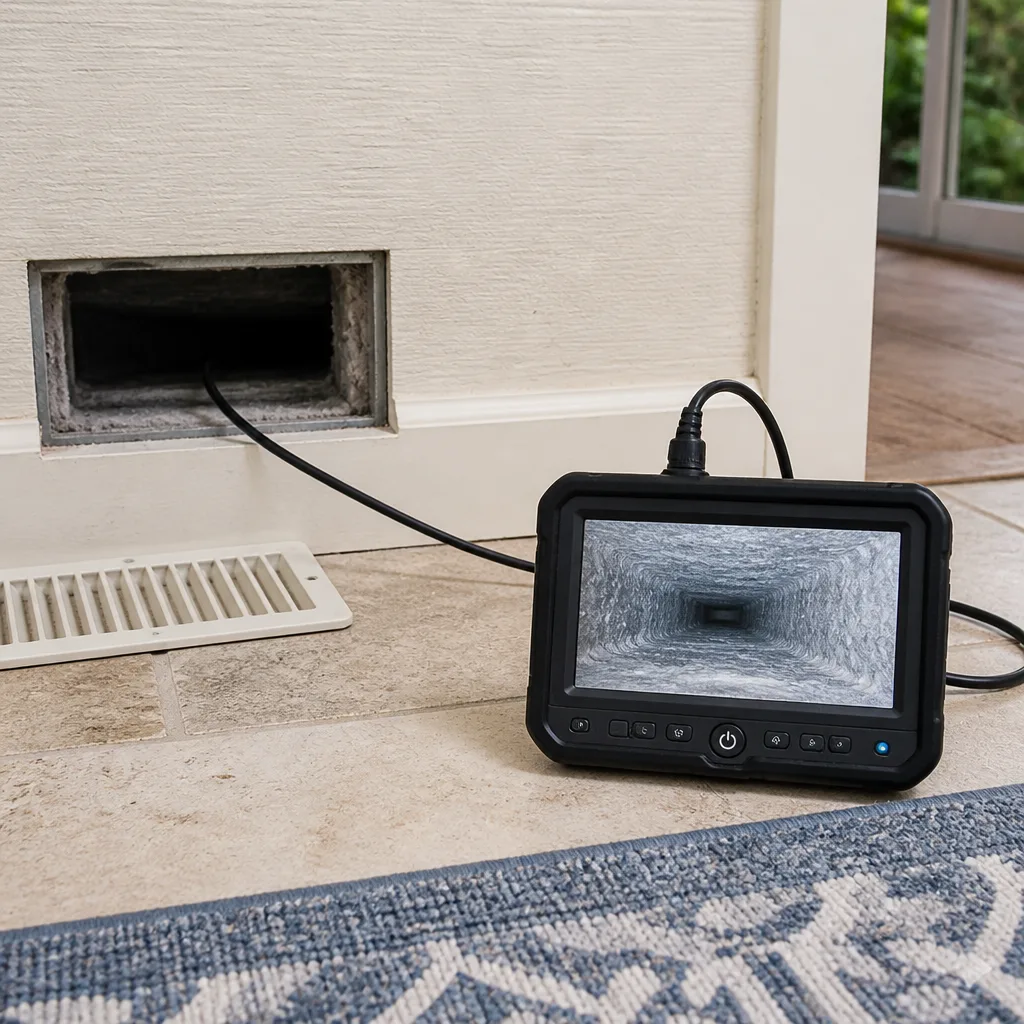 Camera inspection
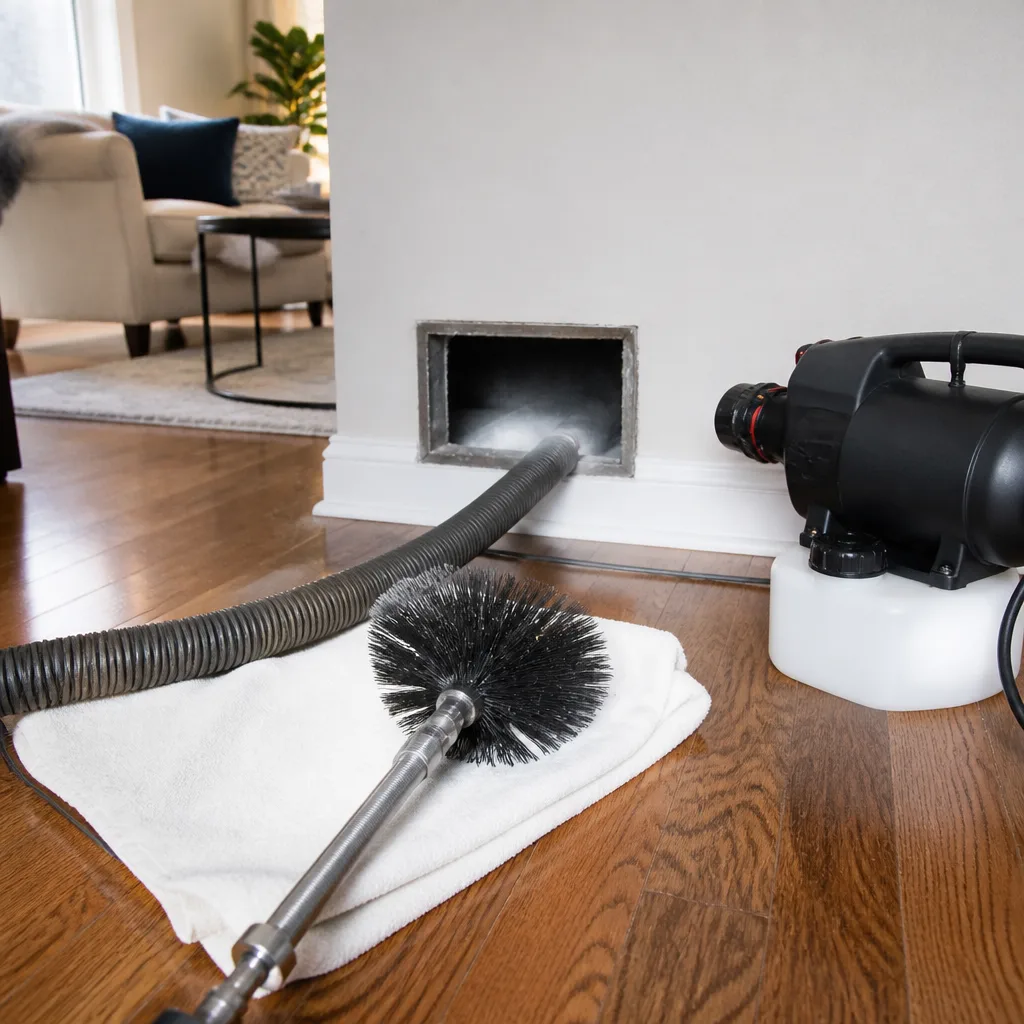 Sanitizing & deodorizing
Whole-system duct and dryer vent check with before-and-after photos - you see exactly what came out of your vents
That "$99 whole-house special" is a bait ad - the real number appears once they are in your hallway, or the "clean" is a shop-vac at the register. We photograph the inside of your ducts before and after instead.
Air Duct Cleaning Emergency Preparedness Guide for Encino Homes
The instinct during a smoke event or an earthquake is to seal the house and wait it out. That instinct is half right. Sealing the windows does nothing if the forced-air system is still running, because the ducts are the one opening in your home you can’t see. During the 2019 Getty Fire, homes across Encino with thermostats set to “auto” were pulling smoke-laden exterior air through the return and redistributing it room to room. Nobody did anything wrong; most people have simply never thought about the HVAC system as part of emergency readiness. This guide covers what to do before, during, and after a smoke, ash, or seismic event in Encino, and what “emergency duct cleaning” actually means when you need it.
Quick Answer
Emergency duct preparedness in Encino means knowing three things in advance: how to shut your HVAC system off completely and switch it to recirculation, which filter you have staged, and how to inspect the system before restarting after an earthquake or smoke event. Duct cleaning after ash or smoke is not a cosmetic job; fine ash and smoke residue behave differently from household dust and need HEPA-level capture and, when odors persist, liner treatment rather than surface vacuuming alone.
Styles & brands we work with
- Whole-home duct cleaning
- Dryer vent cleaning
- Camera inspection
- Sanitizing & deodorizing
Table of Contents
- The HVAC Protocol During an Active Wildfire Smoke Event
- What Ash Fall Does to a Duct System
- Post-Earthquake Duct and HVAC Inspection Priorities
- Documenting Your System Before Fire Season
- What Emergency Duct Cleaning Actually Involves
- Filter Strategy: What to Have Staged
- Building a Duct and HVAC Preparedness Kit
- Common Mistakes to Avoid
The HVAC Protocol During an Active Wildfire Smoke Event
The single most important decision during a smoke event is whether your system is running, and in what mode. Most thermostats offer two modes that matter here: “auto,” which cycles the fan on and off and can pull exterior air through the return, and “on” or “circ,” which runs the fan continuously. Neither is right during heavy smoke. The correct move is to shut the system down entirely unless you have a recirculation setting you’ve verified with your HVAC technician in advance.
Here’s the sequence we recommend teaching every household member before fire season:
- Confirm your system type. A standard split system with a return duct draws interior air and, in most configurations, does not bring in outside air directly. But small gaps and a leaky return can still pull smoke through the envelope. If you have an economizer or fresh-air intake, it must be closed. Ask your HVAC technician to show you where that damper is and how to shut it.
- Shut the system off at the thermostat, then at the breaker. Turning it off at the thermostat stops the call for cooling; killing the breaker prevents a schedule or smart-thermostat override from restarting it automatically.
- Close the fresh-air intake if you have one. This is a physical damper, not a thermostat setting.
- Seal the obvious gaps. Window frames, door sweeps, and the gap under the garage-to-house door. Fine smoke particles travel on air currents.
- Run a standalone HEPA air purifier in the room where you’re spending time. This does not involve the duct system at all, which is the point.
Encino sits in a bowl-shaped stretch of the San Fernando Valley where smoke can pool during a Santa Ana wind event. Even when the fire is miles away, the smoke can settle and linger. Keep the system off until the air quality index drops and the visible ash has cleared. When you turn it back on, expect the first several hours of operation to push any residual smoke odor through the house; that is normal, and it is why the filter change described below matters.
What Ash Fall Does to a Duct System
Ash is not dust with a different color. Ash from a wildfire is a mix of fine particulates, charred organic material, and mineral content that behaves in three ways household dust does not:
- It is finer and stays airborne longer. Much of it falls into the respirable range, which means ordinary furnace filters rated for dust capture let it pass through and it can re-suspend every time the fan runs.
- It is abrasive. Ash drawn through the system scours the interior of flexible duct and can degrade the blower wheel over time. This is one reason post-event cleaning matters even when you don’t see visible deposits.
- It carries odor compounds. Charred material releases smoke odor that clings to the duct liner, the air handler insulation, and the coil fins. Vacuuming removes the particles; it does not necessarily remove the smell.
After an ash fall, Encino homeowners should follow a two-phase response. Phase one is exterior: keep the system off until the ash has stopped falling and the air has cleared, then wipe down hard surfaces and vacuum floors with a HEPA vacuum rather than sweeping, which re-suspends particles. Phase two is the system: have the ducts and the air handler inspected and cleaned with HEPA capture, not a shop vac. The difference matters because a standard vacuum exhausts the fine fraction back into the room it is cleaning.
This is where professional equipment separates a real post-event job from a cosmetic one. A rotary-brush system dislodges deposits from the duct walls while a HEPA vacuum captures the dislodged material at the source; running one without the other pushes half the load into the living space. That pairing is the baseline for post-ash work in Encino, and it’s the same approach specified for commercial cleanings under NADCA guidelines.
Post-Earthquake Duct and HVAC Inspection Priorities
A significant earthquake moves the house in ways the duct system was never designed to absorb. Flexible duct connections, plenum seals, and the air handler mounting are the three most common failure points, and none of them are visible from the thermostat. Before you restart the system after a quake, do a walk-through inspection.
Here’s what to check, in priority order:
- Smell for gas first. If you smell gas or hear hissing near the meter or any appliance, leave the house and call your gas utility from outside. Do not turn anything on or off. This overrides every other step.
- Check the air handler and furnace housing. Is it still sitting level on its platform? Any visible tilt, separation from the plenum, or loose flue connection is a stop sign. Do not run the system until it has been inspected.
- Inspect accessible flexible duct runs in the attic or crawlspace. Look for disconnected collars, crushed sections, or tears. A disconnected return will pull attic air (including insulation fibers) into the house.
- Check the plenum connections at the air handler. The sheet-metal plenum is often sealed with mastic or foil tape; seismic movement can crack the seal even when nothing looks visibly wrong.
- Look at the filter slot and the coil. Dislodged dust and debris often collect here after a quake. A clogged filter will strain the blower.
- Check the condensate drain line. Vibration can dislodge the drain, which leads to water damage on the next cooling cycle.
If any of the first four items turn up an issue, don’t run the system. Call for an inspection. Encino homes with older flexible duct runs in the attic are the most likely to have a connection that worked loose, and a professional inspection covers the sections you can’t safely reach.
Documenting Your System Before Fire Season
Insurance claims after a smoke or ash event are decided on documentation. If you can prove the condition of your duct system before the event, you’re in a much stronger position when you file. This is the part most homeowners skip, and it’s the part that costs the least to do.
Build a “system file” with these items, updated before each fire season:
- Photographs of the air handler, furnace, and visible duct runs. Include a date stamp if your phone does that automatically. Photograph the filter slot with the filter installed.
- Filter replacement records. A simple note with the date and filter rating (the MERV number on the packaging) is enough. Consistency matters more than detail.
- Prior cleaning invoices. If the ducts were professionally cleaned, keep the invoice and the before-and-after photos that came with it. A cleaning record establishes a baseline.
- Any HVAC service records. Repairs, coil cleanings, and blower replacements all belong in the file.
- A short video walkthrough of the attic duct run. Thirty seconds on your phone, dated. It establishes what the run looked like before an event.
Keep a digital copy, not just a paper folder. If the house is damaged and you’re dealing with an insurer from a hotel room, you want the file on your phone. We recommend asking for high-resolution before-and-after photos whenever ducts are cleaned professionally, so the file has a visual record of the interior condition. That record is worth more than any verbal description.
What Emergency Duct Cleaning Actually Involves
“Emergency duct cleaning” is a phrase that gets used loosely. In practice, there are two distinct levels of response after a smoke or ash event, and knowing which one your situation needs prevents both overpaying and under-addressing the problem.
Level one: surface and particulate removal. This is the standard professional cleaning, scaled to the contamination. It uses a rotary brush to dislodge deposits from the duct walls, followed by HEPA vacuum capture of the dislodged material. It covers the supply and return runs, the air handler, the coil, and the blower. This handles the physical ash load and the visible deposits. It is the right first step for any post-ash event.
Level two: liner treatment and odor control. When smoke odor persists after a thorough cleaning, the odor compounds have bonded to the duct liner, insulation, or coil fins. Surface vacuuming won’t remove them. At this level, an antimicrobial treatment is applied to the interior surfaces, and in some cases the liner itself is the problem. This is a job that requires remediation-grade equipment and products, because you’re not just removing deposits, you’re treating the surfaces they were sitting on. Our team uses Guardsman-grade sanitizing products for this work, and we’re set up to handle the contamination loads that go beyond ordinary dust.
Which level you need depends on two things: how much ash entered the system, and whether the odor persists after the first cleaning. If you can still smell smoke in the house two weeks after a thorough cleaning, the system needs a treatment, not another vacuum pass. A quick test: run the fan on its own for an hour with the windows closed, then smell the air at a supply register. Faint charred odor means level two.
Filter Strategy: What to Have Staged
Your filter is the one component you can swap without a technician, and having the right ones on hand before an event is the difference between a manageable situation and a system full of ash. The temptation during a smoke event is to grab the highest MERV filter available. That’s usually a mistake for a residential system that wasn’t designed for the pressure drop.
Here’s a practical strategy for Encino homes:
- Stage a stack of filters rated for your system. Ask your HVAC technician what MERV rating your blower can handle without starving airflow. Most residential systems top out well below the highest rating available at the hardware store.
- Keep a backup set of the filters you actually use, not a “better” filter you hope will help. A filter that restricts airflow too much strains the blower and can freeze the coil.
- Replace the filter immediately after any smoke or ash event. Even if it doesn’t look dirty, the fine fraction loads it faster than household dust.
- For persistent smoke exposure, plan a system-level air quality upgrade. A whole-home filtration unit installed at the air handler is designed to handle fine particulate continuously, rather than relying on a filter in a slot. We work with Honeywell and Aprilaire air quality systems and can advise on what fits your existing setup.
One more point: don’t stockpile filters in the garage or attic. Heat and humidity degrade the media. Keep them inside the house in a sealed bag.
Building a Duct and HVAC Preparedness Kit
Everything you need to protect the forced-air system during an emergency fits in a single box or drawer. Build it before fire season, not during.
- Two spare filters at the correct MERV rating for your system.
- A printed card with your system details: make, model, filter size, breaker location, and the location of the fresh-air damper if you have one. Tape a copy next to the thermostat.
- A roll of foil HVAC tape for temporary sealing of a torn flex duct in an emergency (not a permanent fix).
- A flashlight dedicated to attic inspection, kept with the kit.
- A printed copy of your system file (photos and records), because you may not have power or internet.
- The number of an HVAC technician and a duct cleaner you trust, written on the card, not saved only in your phone.
The kit’s value is not the items themselves; it’s that assembling it forces you to learn where the breaker is, what filter fits, and who to call. That knowledge is what you actually need at 2am when the smoke alarm goes off and you’re deciding whether to kill the system.
Common Mistakes to Avoid
- Running the system on “auto” during a smoke event. Auto cycles the fan on and off, which can pull smoke-laden exterior air through gaps and the return. Shut it off at the breaker, not just the thermostat.
- Swapping in the highest-MERV filter you can find. An over-restrictive filter starves airflow and strains the blower. Match the filter to what your system was designed for.
- Sweeping or leaf-blowing after an ash fall. Both re-suspend fine ash into the air where it can be drawn into the return. Use a HEPA vacuum or a damp cloth instead.
- Restarting the system after an earthquake without checking the plenum and air handler. Seismic movement can crack a seal or disconnect a flex run that looks fine from the thermostat.
- Assuming a cleaning removed the smoke odor. Surface cleaning handles particles; odor compounds bonded to the liner need treatment. Test by running the fan and smelling a register.
- Relying on a shop vacuum for post-ash cleanup. A shop vac exhausts the fine fraction back into the room. Professional HEPA capture is the difference between cleaning and redistributing.
- Skipping the documentation step. Insurance claims turn on what you can prove. A dated photo file and cleaning records are worth more than any verbal account after the fact.
See the difference
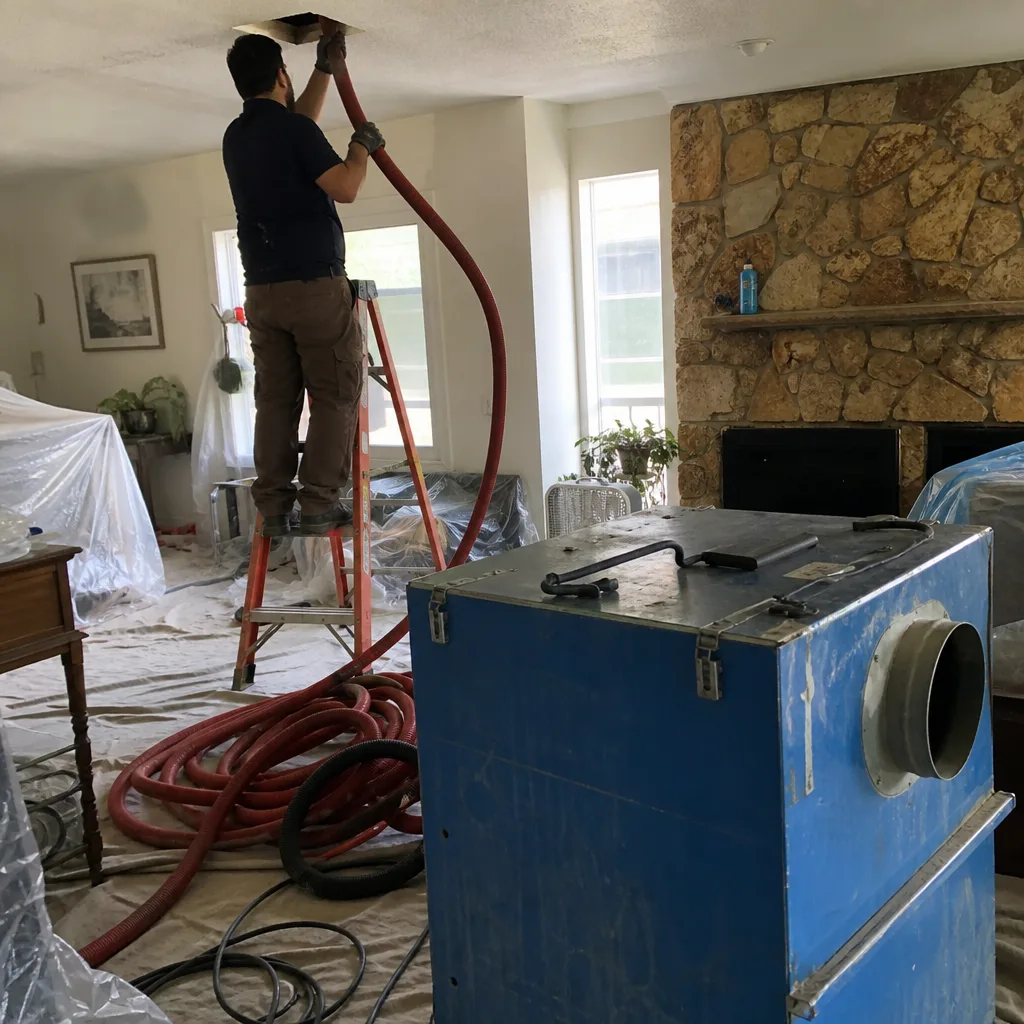 Before
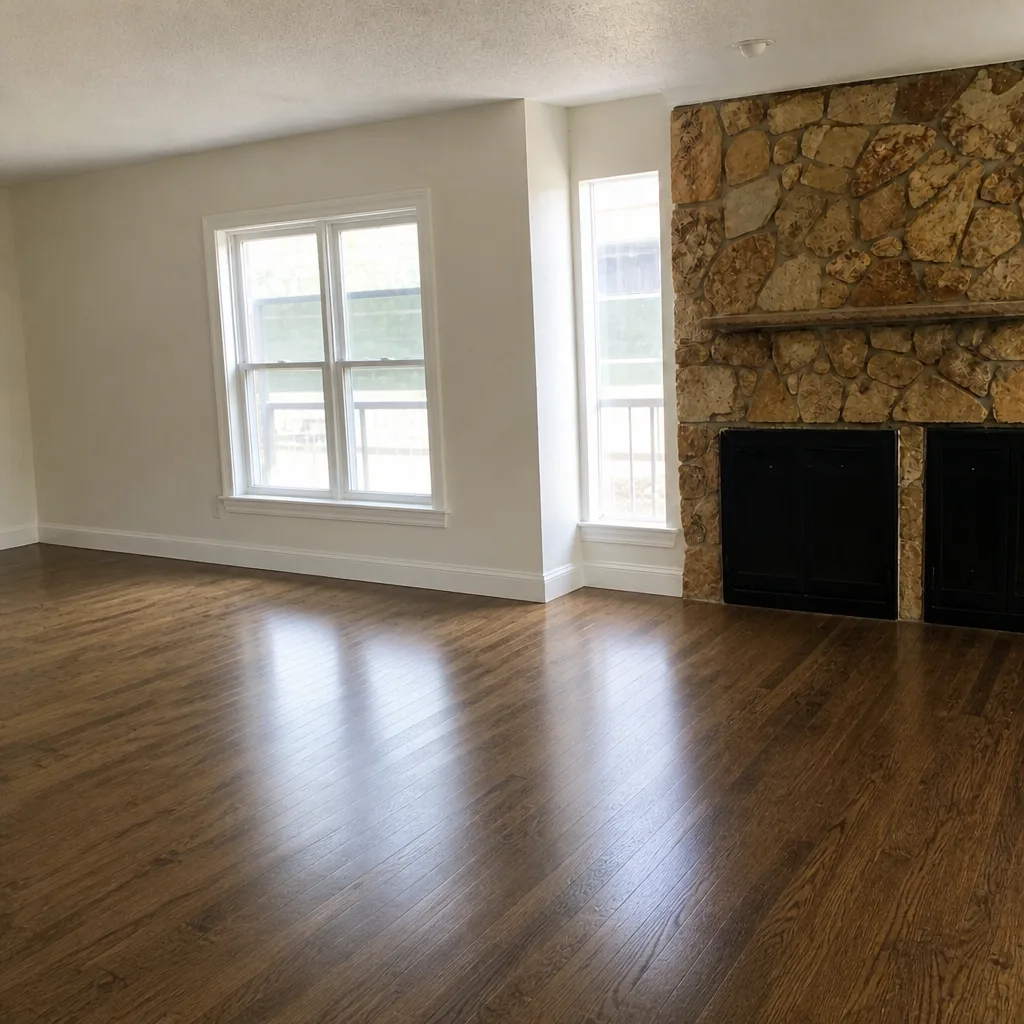 After
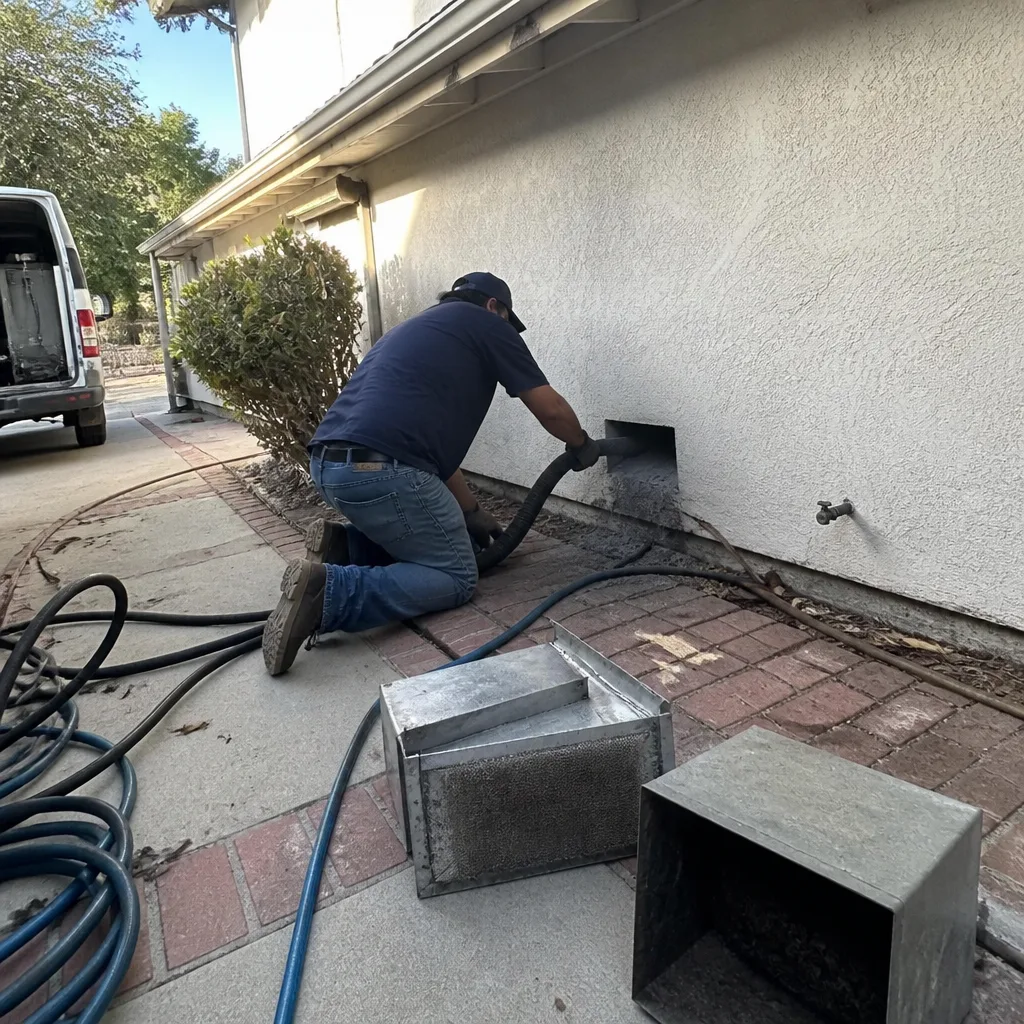 Before
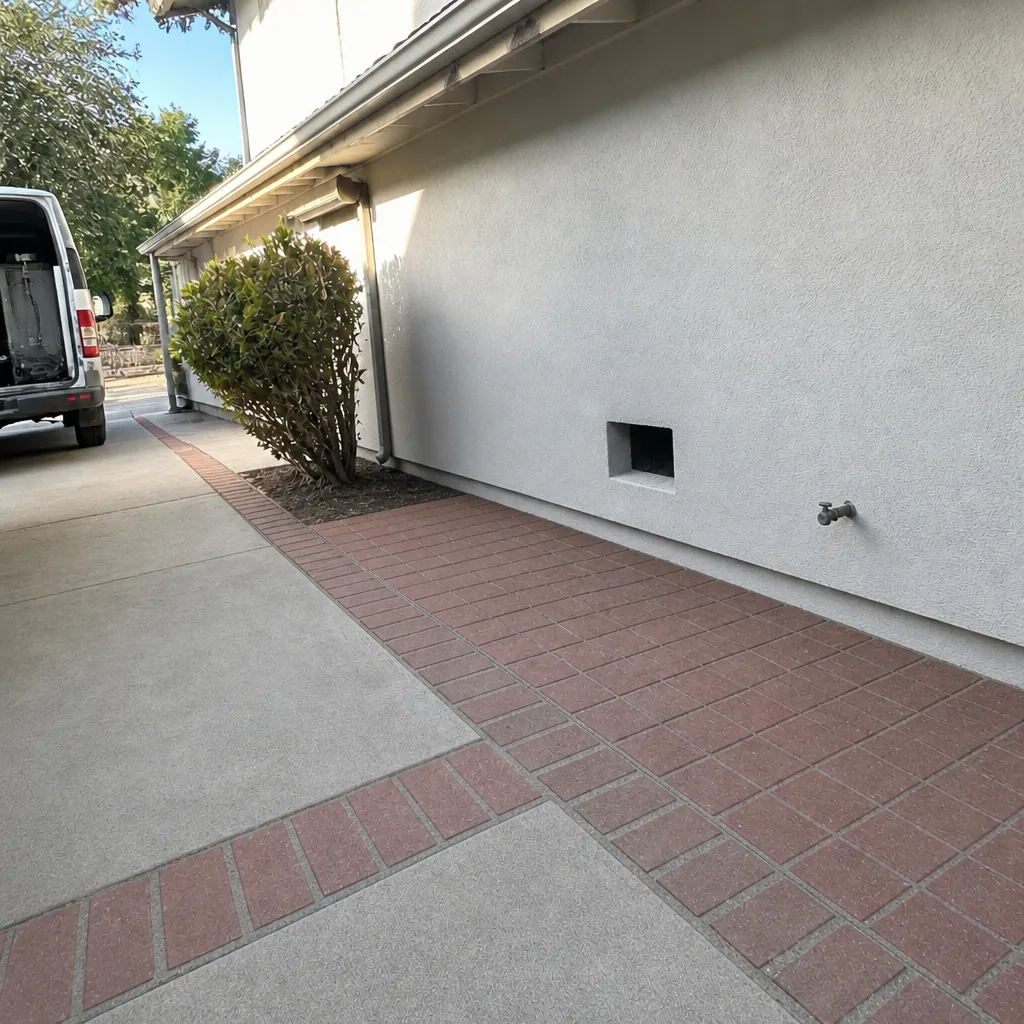 After
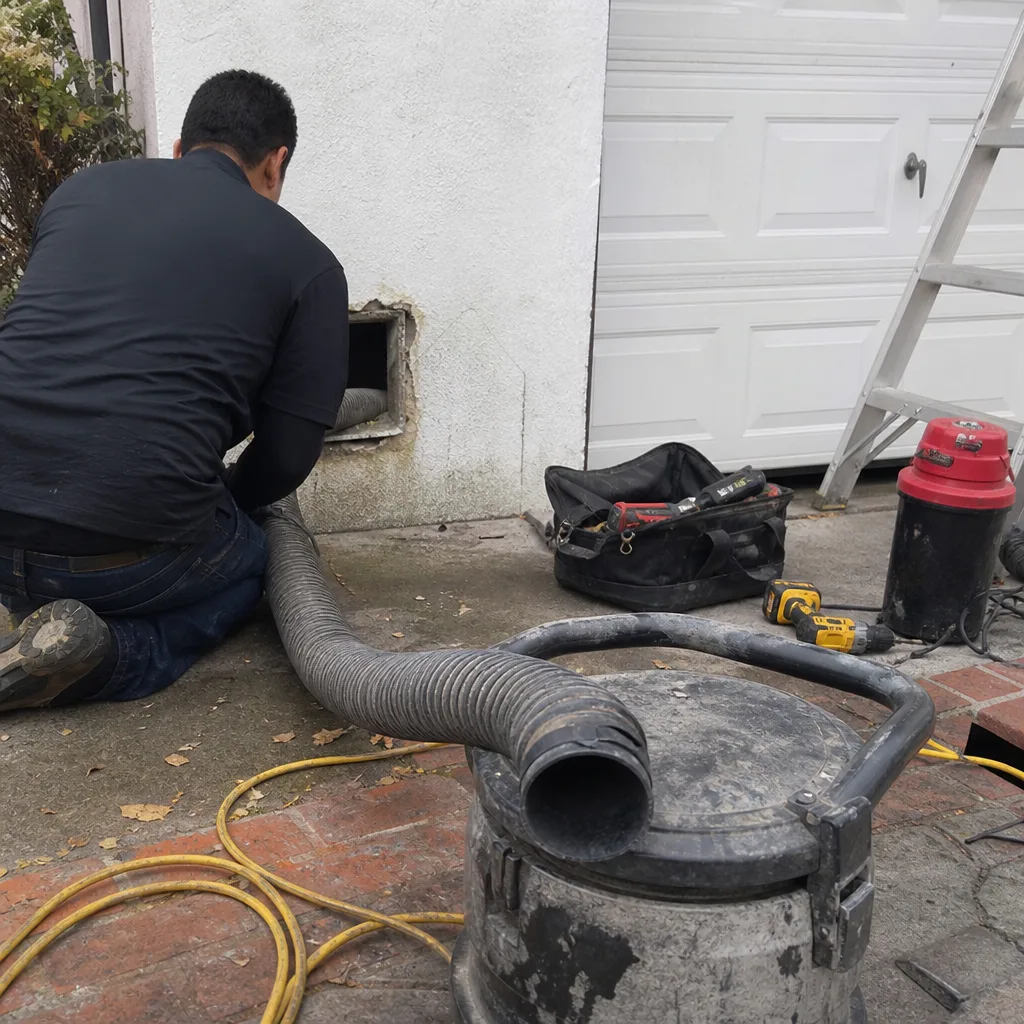 Before
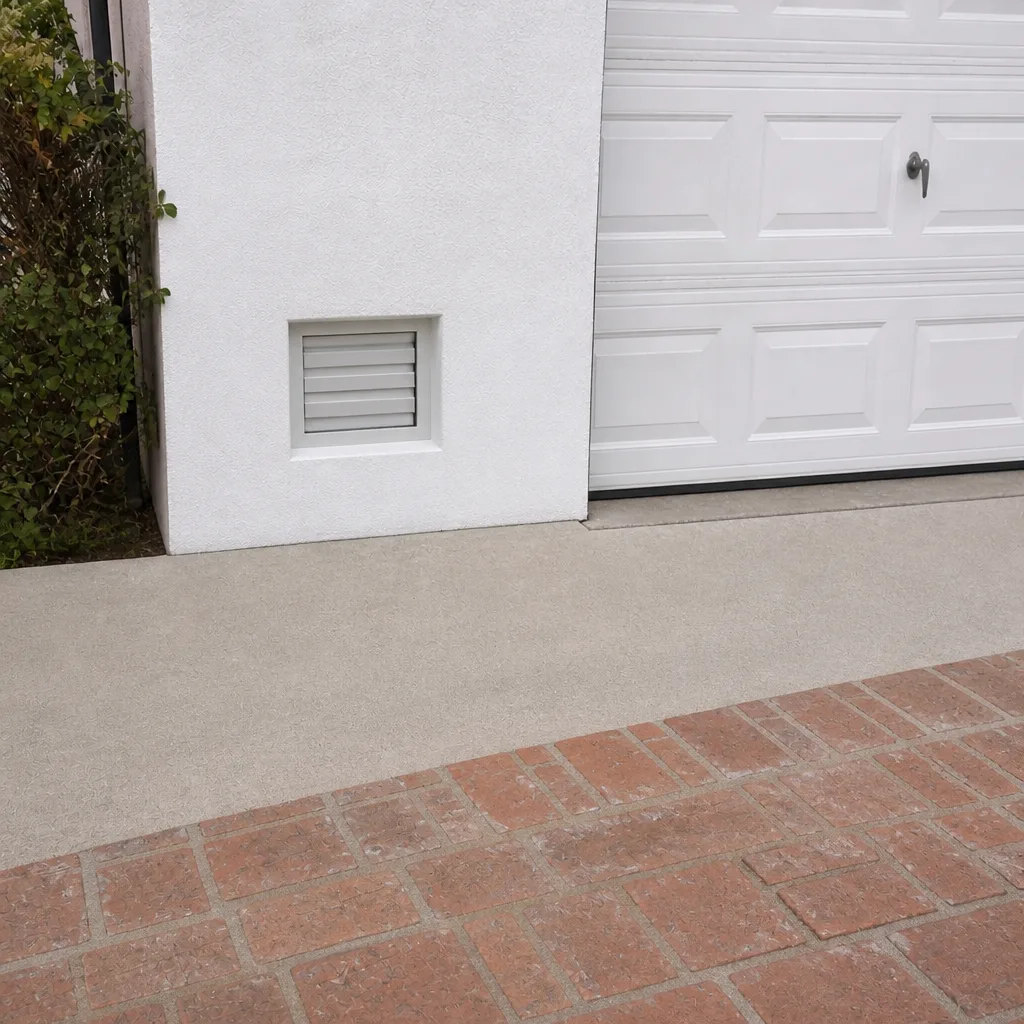 After
When to Call a Professional
Call a professional duct cleaner or HVAC technician after any smoke or ash event that visibly deposited material in or around your home, and always before restarting a system that has been through a significant earthquake. Call immediately if the air handler is tilted, the plenum is separated, or you see disconnected flex duct in the attic. Call if a smoke odor persists after a thorough cleaning, because that points to liner or coil contamination a shop vac can’t fix. And call if you’ve never had the system inspected, since a baseline is what makes a future claim possible. Air Duct Cleaning Encino offers free estimates in Encino – call (877) 492-1986. We answer 24/7. Fast dispatch from 7am to 7pm, Sunday through Friday.
Frequently Asked Questions
Yes. Shut the system off at the thermostat and at the breaker when smoke is heavy, and close any fresh-air damper you have. Running the system on auto can pull smoke-laden exterior air through the return and redistribute it throughout the house. Call (877) 492-1986 for an exact assessment of your setup. Estimates are free.
Wait until the ash has stopped falling and the outdoor air has cleared, then schedule a professional cleaning within a few weeks. The fine fraction of ash stays airborne and loads the filter quickly, so an immediate filter change matters even if the full cleaning is scheduled later. Call (877) 492-1986 to book a free estimate.
Check the air handler and furnace housing for tilt or separation, inspect accessible flex duct runs in the attic for disconnections or tears, verify the plenum seal at the air handler, and look at the filter and coil for dislodged debris. If you smell gas, leave the house and call your gas utility first. Any structural issue means don’t run the system until it’s inspected.
Post-event duct cleaning is typically priced by the size and configuration of the system, not per vent, and a full-system cleaning with air handler and coil coverage generally runs in the several-hundred to low-four-figure range depending on the scope. We give one flat price per system, agreed in writing before work starts. Call (877) 492-1986 for a free estimate.
The most common reason is that the low figure covers a single pass with a brush or vacuum and doesn’t include the air handler, coil, or liner treatment, which is where most of the contamination sits after a smoke event. Ask what’s included before you book. We quote the whole system up front and photograph it before and after. Call (877) 492-1986 for a written estimate.
Ask for before-and-after photos of your own ducts, not stock images, and confirm the cleaning covers the air handler and coil, not just the visible runs. If smoke odor persists after cleaning, the system needs liner treatment rather than another vacuum pass. Call (877) 492-1986 to schedule a free assessment.
You can change the filter and wipe down surfaces, but duct interior cleaning after ash requires HEPA capture that a shop or household vacuum doesn’t provide. A shop vac exhausts the fine fraction back into the room. Professional equipment removes the deposits rather than redistributing them.
The Bottom Line
Emergency duct preparedness in Encino is not a product you buy; it’s a set of decisions you make in advance. Know how to kill your system at the breaker, know what filter fits, know where the fresh-air damper is, and keep a dated file of photos and cleaning records. During a smoke event, shut the system off and run a standalone air purifier. After an ash fall, change the filter immediately and schedule a HEPA-based professional cleaning. After an earthquake, inspect the air handler and attic duct runs before restarting. The system is the one part of your home you can’t see; treat it like part of the emergency plan.
When you’re ready to build a baseline or respond to an event, Air Duct Cleaning Encino offers free estimates in Encino. Call (877) 492-1986. We answer 24/7. Fast dispatch from 7am to 7pm, Sunday through Friday. Our technicians have up to 13 years of experience, and your entire forced-air system – supply and return ducts, air handler, coil, and air quality treatment – can be handled in one visit.
Written by the team at Air Duct Cleaning Encino.