
Last updated November 22, 2026
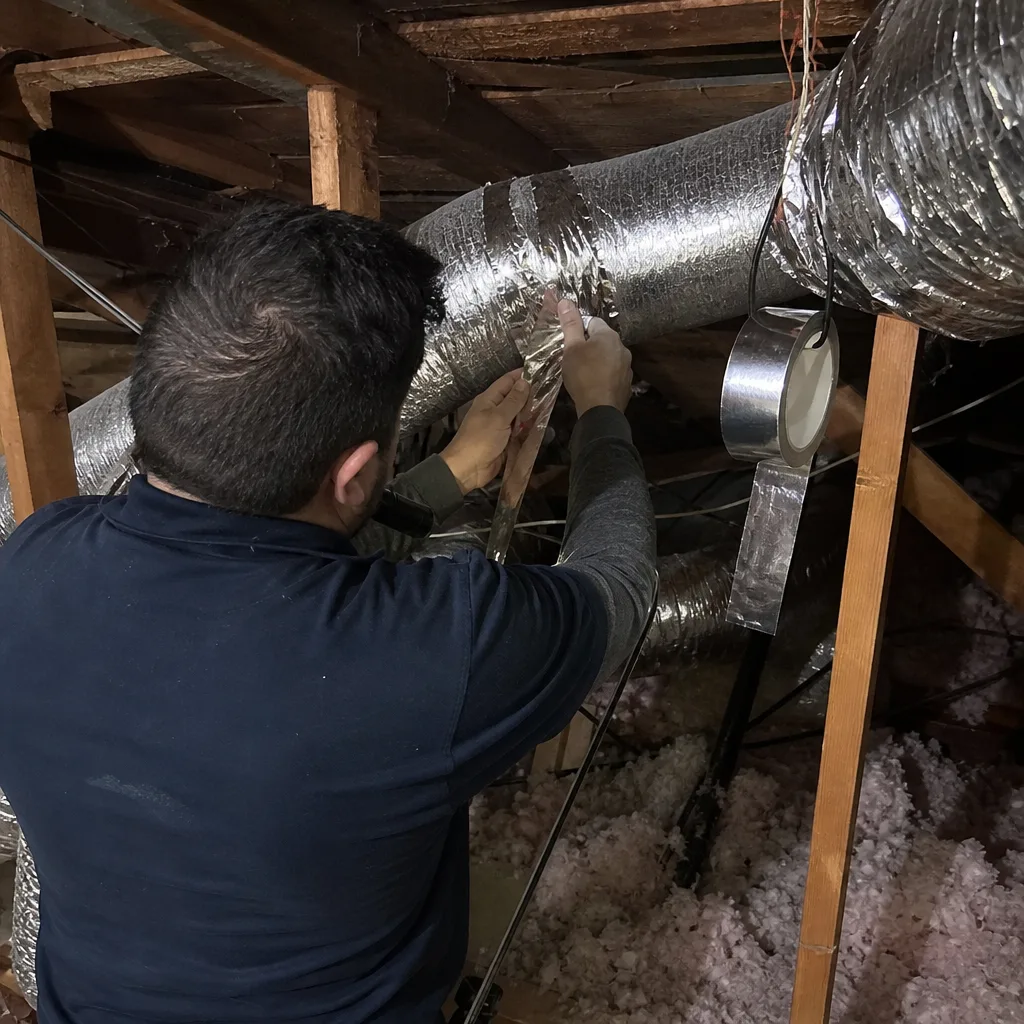
 Whole-home duct cleaning
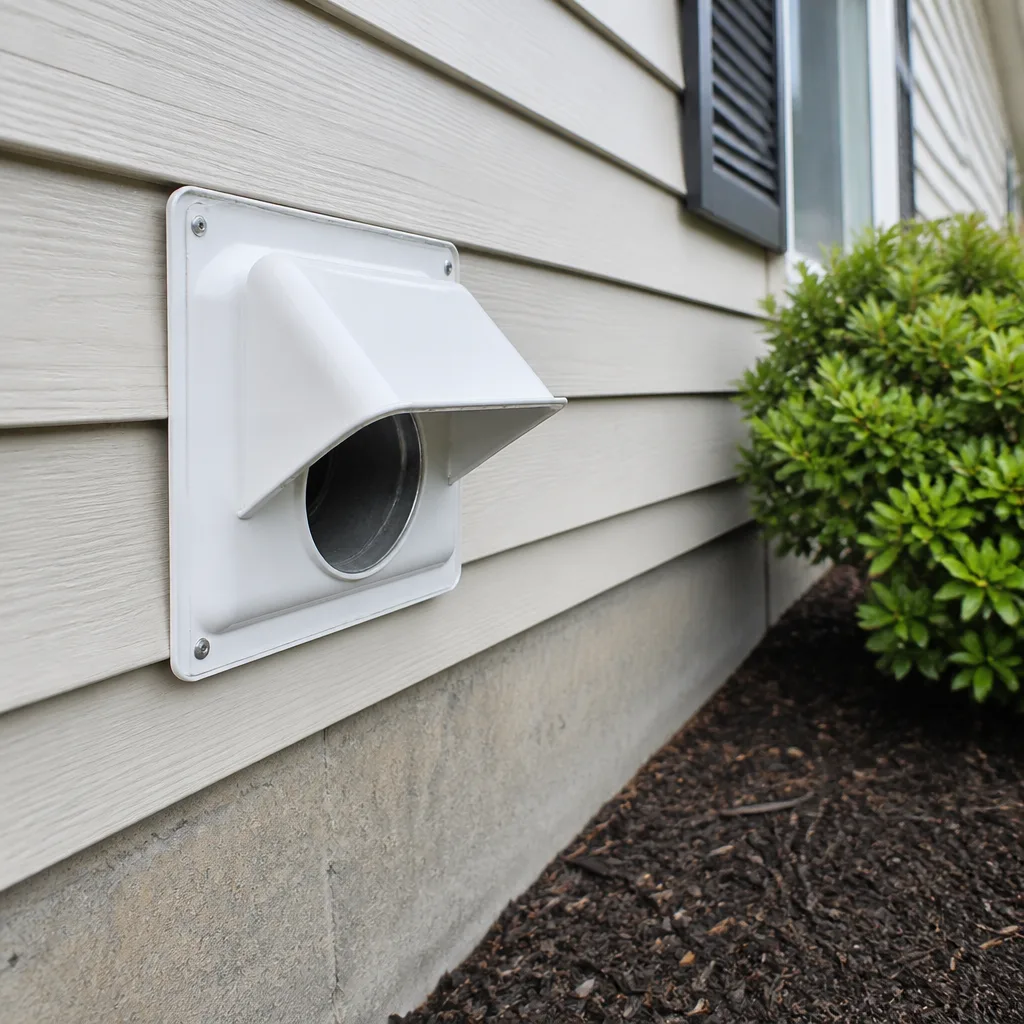 Dryer vent cleaning
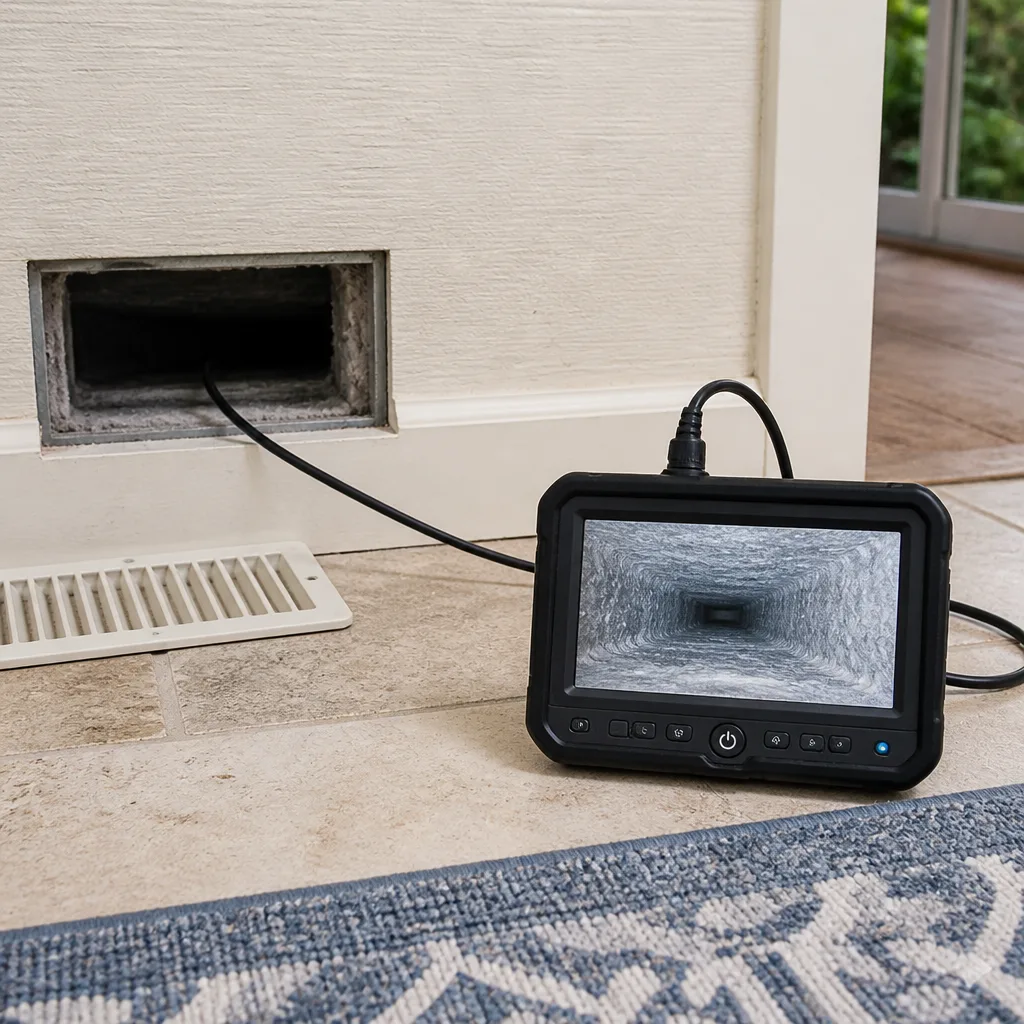 Camera inspection
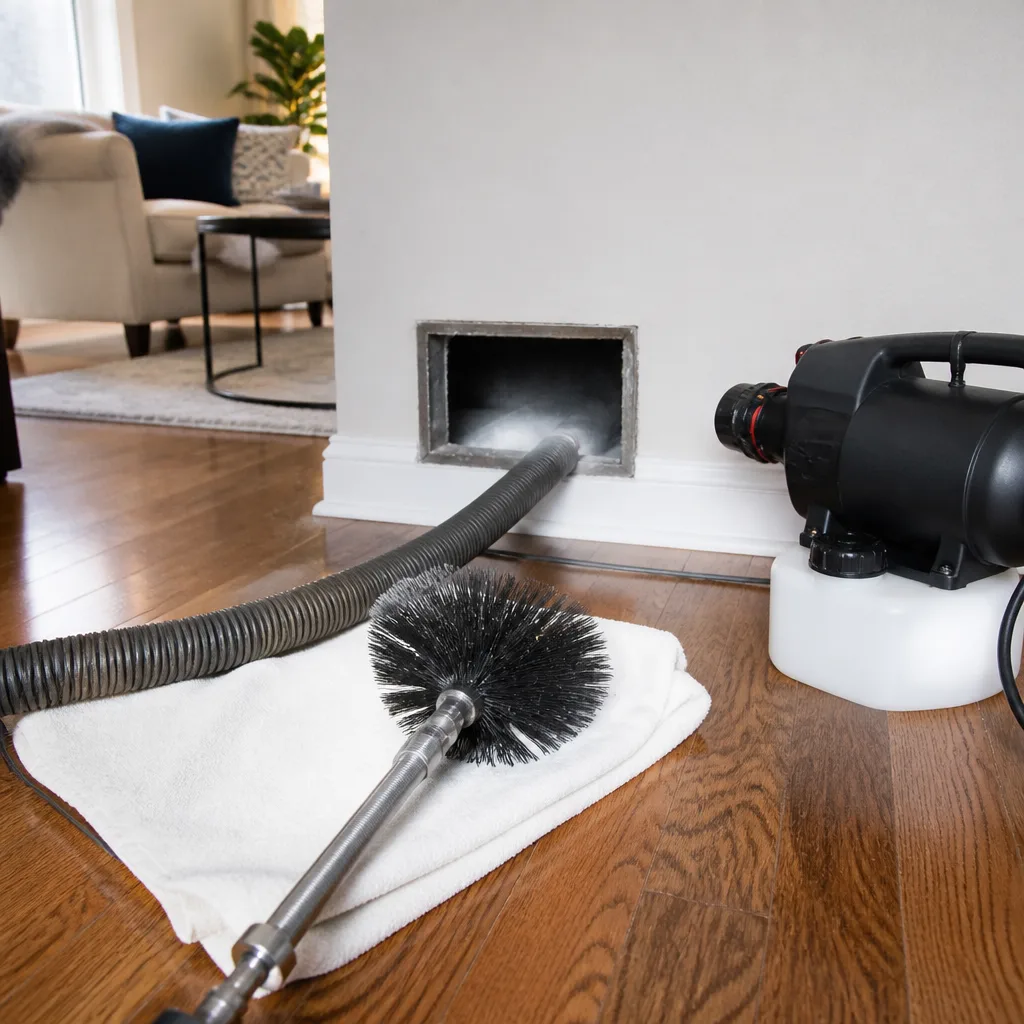 Sanitizing & deodorizing
Whole-system duct and dryer vent check with before-and-after photos - you see exactly what came out of your vents
That "$99 whole-house special" is a bait ad - the real number appears once they are in your hallway, or the "clean" is a shop-vac at the register. We photograph the inside of your ducts before and after instead.
Air Duct Cleaning Permits, Codes & Inspections in Encino, CA: What You Need to Know
Here’s a scenario that plays out in Encino more often than most homeowners realize. A technician is cleaning your ducts, notices a few damaged sections, and offers to swap them out on the spot. It feels convenient. It might also be a licensed HVAC contractor’s job, and if it’s performed by someone without the proper California license, the work can jeopardize your equipment warranty and create real liability when you sell the house. Most people never think to ask. That gap between “cleaning” and “construction” is exactly where trouble lives. This guide walks through what California actually regulates, where the permit line falls, and how to protect yourself before anyone climbs into your attic.
Quick Answer
Standard air duct cleaning in Encino does not require a permit, because it’s maintenance, not construction. But duct replacement, new duct runs, significant sealing work, and mold remediation can fall under California contractor licensing rules and, in some cases, local permit requirements. The person doing that work needs the right license for it, and the homeowner needs documentation. Knowing which category your job sits in is the whole ballgame.
Styles & brands we work with
- Whole-home duct cleaning
- Dryer vent cleaning
- Camera inspection
- Sanitizing & deodorizing
Table of Contents
- How California Classifies Duct and HVAC Work
- When Duct Work in Encino Triggers a Permit
- Mold Remediation in Ducts and What Documentation You Need
- HOA Rules in Encino Condo Communities
- Why Unpermitted Work Surfaces at Home Sale
- What a Legitimate Duct Inspection Looks Like
- A Pre-Hire Checklist for Encino Homeowners
- Questions to Ask Before Anyone Starts Work
How California Classifies Duct and HVAC Work
The California Contractors State License Board (CSLB) sorts construction work into license classifications. Two matter most here: C-20, which covers HVAC (warm-air heating, ventilating, and air-conditioning), and C-10, which covers electrical work. Duct cleaning itself is not a licensed construction trade. Duct installation, modification, and the ductwork that connects to a furnace or air handler sits squarely in the C-20 world.
This is where the line gets blurry for homeowners. A cleaner arrives, removes debris from the supply and return runs, and everything is fine. Then that same person offers to cut in a new register, rebuild a crushed flex run, or replace a section of sheet metal trunk. That’s not cleaning anymore. That’s HVAC modification, and California expects it to be done by someone holding a C-20 license in good standing with the CSLB.
Where does C-10 electrical come in? If the work touches the wiring that feeds your air handler, a disconnect, or a control circuit, that’s electrical scope. In practice, a properly licensed HVAC contractor carries the C-20 and coordinates electrical portions or holds additional classifications. Homeowners rarely need to memorize the codes. They need to know which questions to ask, and the biggest one is simply: which license covers this specific task?
Why the Distinction Matters in Practice
- A cleaner with no license can legally clean ducts. That same person cannot legally perform duct modification or installation.
- A C-20 license is the correct credential for duct replacement, new runs, and HVAC system changes.
- C-10 electrical work is a separate scope that shouldn’t be performed under a cleaning invoice.
- You can verify any contractor’s license status directly through the CSLB before work begins.
- Work performed by an unlicensed contractor can void parts of a manufacturer’s equipment warranty.
We’ve watched this play out in the field. Our technicians have up to 13 years of experience, and part of that experience is knowing where cleaning ends and licensed construction begins. We stay on our side of that line, and it’s the reason some jobs get referred rather than bundled.
When Duct Work in Encino Triggers a Permit
Encino sits within the City of Los Angeles, so building permit authority runs through the Los Angeles Department of Building and Safety rather than the county planning department for most residential work. Our region has a mix of city and county jurisdiction depending on the exact parcel and whether it falls in unincorporated territory. The practical takeaway for homeowners is this: call the authority having jurisdiction for your specific address before assuming anything.
Routine air duct cleaning does not require a permit. Neither does replacing a filter or cleaning an HVAC coil. Permit territory starts when the work changes the building or its systems.
Work That Typically Requires a Permit
- Adding new duct runs or extending ductwork to a new room or addition.
- Replacing a significant portion of a system as part of a remodel or major alteration.
- Installing or replacing heating and air-conditioning equipment.
- Any work that alters the structural framing to accommodate duct routing.
- Electrical work that adds a circuit or alters panel capacity.
Sealing existing ducts with mastic or approved sealant, replacing a single damaged section in kind, and cleaning are normally maintenance-level tasks with no permit requirement. The line between repair and alteration is where local inspectors have discretion. A crushed return run that gets rebuilt identically is very different from a return that gets enlarged or rerouted.
The Encino Housing Factor
Encino has a broad housing mix. Mid-century ranch homes around Encino Village and Amestoy Estates often carry original ductwork that’s been patched over the years. Newer construction near the hills has different routing and sometimes multiple zones. In older homes, what looks like a small repair frequently turns into something larger once the ducts are opened up, and that’s when a permit question becomes relevant. Ask before anyone cuts.
Mold Remediation in Ducts and What Documentation You Need
Once mold is confirmed inside a duct system, the job stops being cleaning. The California Department of Public Health publishes guidance for mold remediation that treats affected building materials and HVAC systems as a remediation project, not a maintenance task. That distinction shapes who should perform the work and what paperwork should follow it.
A remediation-grade job generally includes containment, negative pressure where required, HEPA filtration, and documented post-remediation verification. The word documented matters. A licensed remediator should be able to provide the scope of work, the methods used, the equipment specifications, and confirmation that the affected area met the project’s clearance criteria before the system goes back into service.
This is where our equipment matters. We run Rotobrush rotary-brush systems alongside Nikro HEPA vacuum equipment, and we keep Abatement Technologies equipment available for jobs that need remediation-level air quality work. That’s not standard for residential duct cleaners, and it’s the capability that lets us handle contamination concerns other companies decline.
What Documentation Should Look Like
- A written scope describing affected areas and the extent of contamination.
- Equipment specification for HEPA filtration and any negative air setup.
- Photographs before and after the work.
- A statement of clearance or post-work verification results.
- The license or certification held by the party supervising the remediation.
If a company can’t produce those items, ask why. The documentation isn’t paperwork for its own sake. It’s what protects you if you sell the home or file a claim. It’s also why we offer HVAC cleaning as a documented process rather than a verbal promise.
HOA Rules in Encino Condo Communities
Encino along the Ventura Boulevard corridor has a substantial number of condominiums, townhomes, and planned developments, and many of them carry CC&Rs that govern access to shared and semi-private spaces. If your unit shares a duct chase, a common attic, or a roof-mounted HVAC location with neighbors, your HOA almost certainly has something to say about the work.
Typical HOA concerns include which days and hours contractors may work inside the building, whether roof access requires prior approval, how equipment gets staged, where waste is carried out, and whether the association requires proof of contractor licensing and insurance before anyone is allowed on common property. Some complexes want advance notice to neighbors, especially where equipment noise carries through shared walls.
What to Confirm With Your HOA Before Work
- Whether roof or common-area access requires a signed approval or key checkout.
- What window of hours contractors may work inside the building.
- Whether proof of licensing and insurance must be filed with management first.
- Where materials and equipment may be staged and where debris is disposed.
- Whether the association has restrictions on rooftop equipment changes.
A little preparation saves a lot of headaches. We’d rather know about the parking restriction and the freight elevator rule before the technician arrives than after. This is a scheduled job, not an emergency, so there’s time to clear the HOA requirements first.
Why Unpermitted Work Surfaces at Home Sale
Home inspectors are thorough, and their reports have gotten more detailed. When a buyer’s inspector opens a return plenum and finds a mismatched section scabbed into the trunk with tape that’s failed, the report says so. It becomes a line item in the repair negotiation, and sometimes it becomes a disclosure issue.
Permitted work has a paper trail: a permit number, an inspection record, and a closed-out file. Unpermitted work has none of that. If the work altered the HVAC system in a way the buyer’s inspector considers significant, a seller may be asked to obtain retroactive approval or a licensed sign-off before closing. In Encino’s market, where buyer contingencies are scrutinized carefully, that can stall a sale.
Building a Clean File That Travels With the House
- Keep every invoice, including the scope of work and date of service.
- Save before-and-after photographs of the ducts and equipment.
- Keep permit numbers and inspection sign-offs if any work required them.
- Note the license classification of whoever performed licensed work.
- Store documentation where it’s easily retrieved for a future sale.
A single digital folder resolves most of this. When a buyer’s agent asks for records, you hand over a folder. That’s a much better conversation than trying to reconstruct what happened years earlier.
What a Legitimate Duct Inspection Looks Like
A proper inspection is methodical and documented. It’s not a quick peek with a flashlight and a verbal opinion. In our experience, homeowners get the most value when the inspection covers the whole forced-air system, not just the visible registers.
Inspection Sequence
- Walk the system: supply registers, return grilles, air handler, and any accessible duct runs.
- Photograph conditions before touching anything, including debris levels and damage.
- Check for disconnected joints, crushed flex sections, failed tape, and gaps at seams.
- Assess insulation integrity and check for moisture or staining that suggests intrusion.
- Evaluate the air handler, coil, and blower for buildup or biological growth.
- Measure airflow or static pressure where relevant to determine system performance.
- Report findings in writing and separate cleaning, repair, and remediation scopes.
That separation matters. A scope that lumps cleaning, a duct repair, and a filter upgrade into one hand-shake quote is hard to evaluate. We write each service separately, which is also why our duct repair and sealing work stays in-house. We find the problem, then fix it, rather than handing you off to someone else after the cleaning is complete.
A Pre-Hire Checklist for Encino Homeowners
Before you hire anyone for duct work in Encino, run through this list. It takes ten minutes and prevents most of the problems this guide describes.
- Verify the license. Check CSLB status for any contractor performing duct modification, replacement, or HVAC work.
- Ask what’s cleaning and what’s construction. Get the scope broken out item by item.
- Confirm insurance. Ask for proof of general liability coverage before work begins.
- Ask about permits. If the work is a modification, ask directly whether a permit is required for your address.
- Request written documentation. Photos, scope, and a written estimate that sets the final price.
- Confirm HOA requirements. If you’re in a condo complex, clear the access and hours before booking.
- Ask about equipment. Name-brand professional equipment beats a shop vac and a hose.
Questions to Ask Before Anyone Starts Work
If you ask nothing else, ask these six. They’re designed to surface the difference between a professional operation and a coupon-driven one.
- What’s the license classification for this specific task? Not the company in general, this specific task.
- What does a typical job in an Encino home typically involve, start to finish? You want to hear about inspection, containment, cleaning, and drying, not just the vacuum.
- Will you fix what you find? Duct repair and sealing in-house means the job doesn’t end at cleaning.
- Is the price per system or per vent? Per-system pricing is honest. Per-vent pricing invites bait-and-switch.
- What documentation will I receive? Photos, before-and-after, and a written scope.
- Do you work with air quality upgrades? If the ducts need filtration or humidity control afterward, someone should be able to install it.
Common Mistakes to Avoid
- Letting an unlicensed cleaner perform duct modification. Cleaning is fair game for a non-licensed operator, but cutting in a new run or replacing a section is C-20 territory. Ask which license covers the task before you approve it. Skipping this step can void your equipment warranty and complicate a future sale.
- Assuming “no permit needed” applies to everything. Cleaning doesn’t need a permit. Duct alteration, new runs, and equipment changes usually do. The mistake is treating all duct work as the same category.
- Skipping the CSLB check. It takes a few minutes online and tells you whether a contractor is licensed and in good standing. Encino homeowners have come out ahead by doing this before every job, not after.
- Ignoring HOA rules in condo complexes near Ventura Boulevard. Access restrictions, work hours, insurance filing, and roof access approvals are common in Encino HOA communities. Confirm before the technician is standing in the lobby.
- Accepting a verbal scope with no photos. If you can’t see before-and-after photographs and a written scope, you can’t tell whether the work happened. This is the single easiest thing to get right.
- Treating mold as ordinary dust. Once contamination is present, the job becomes remediation and should follow remediation documentation. A quick vacuum of a moldy duct doesn’t resolve anything.
- Filing zero paperwork. The homeowner who keeps invoices, photos, and permit records along with the duct service history has a much easier time at sale. Make the folder.
See the difference
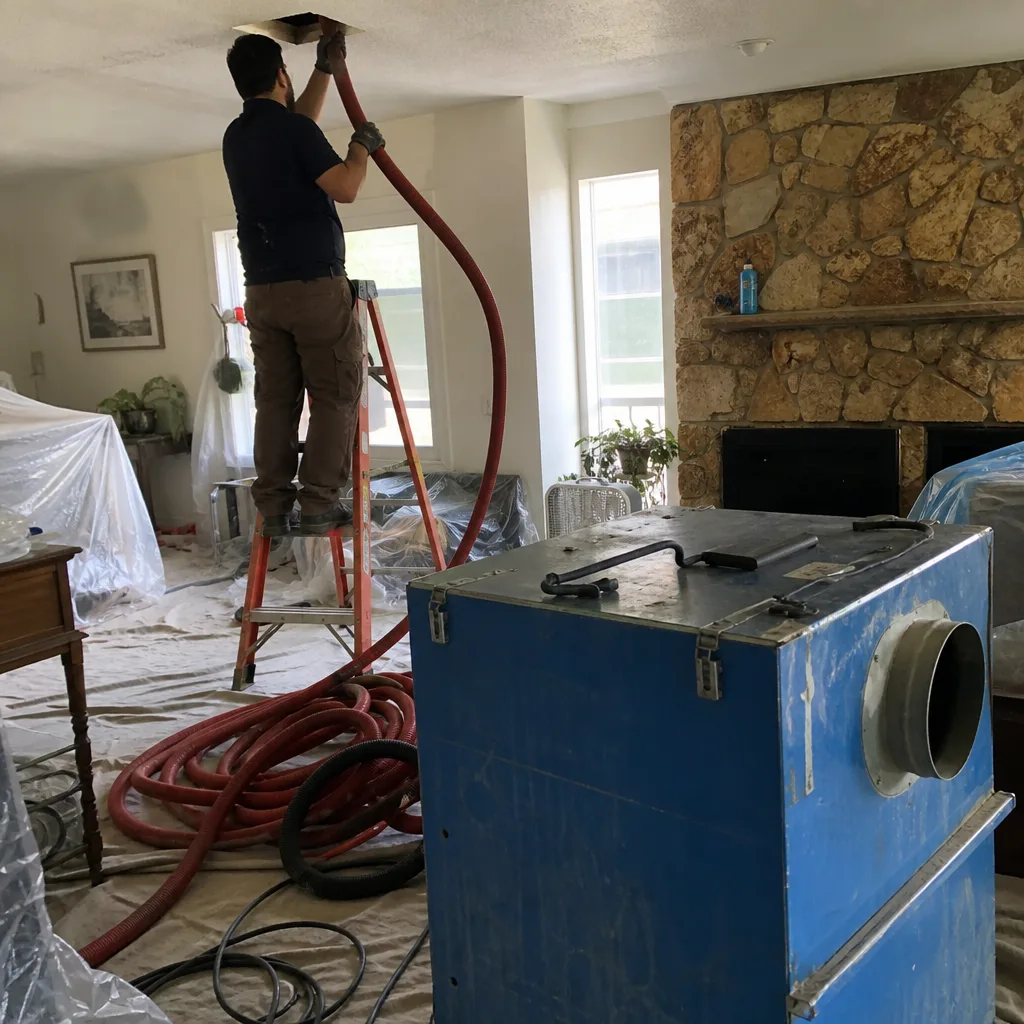 Before
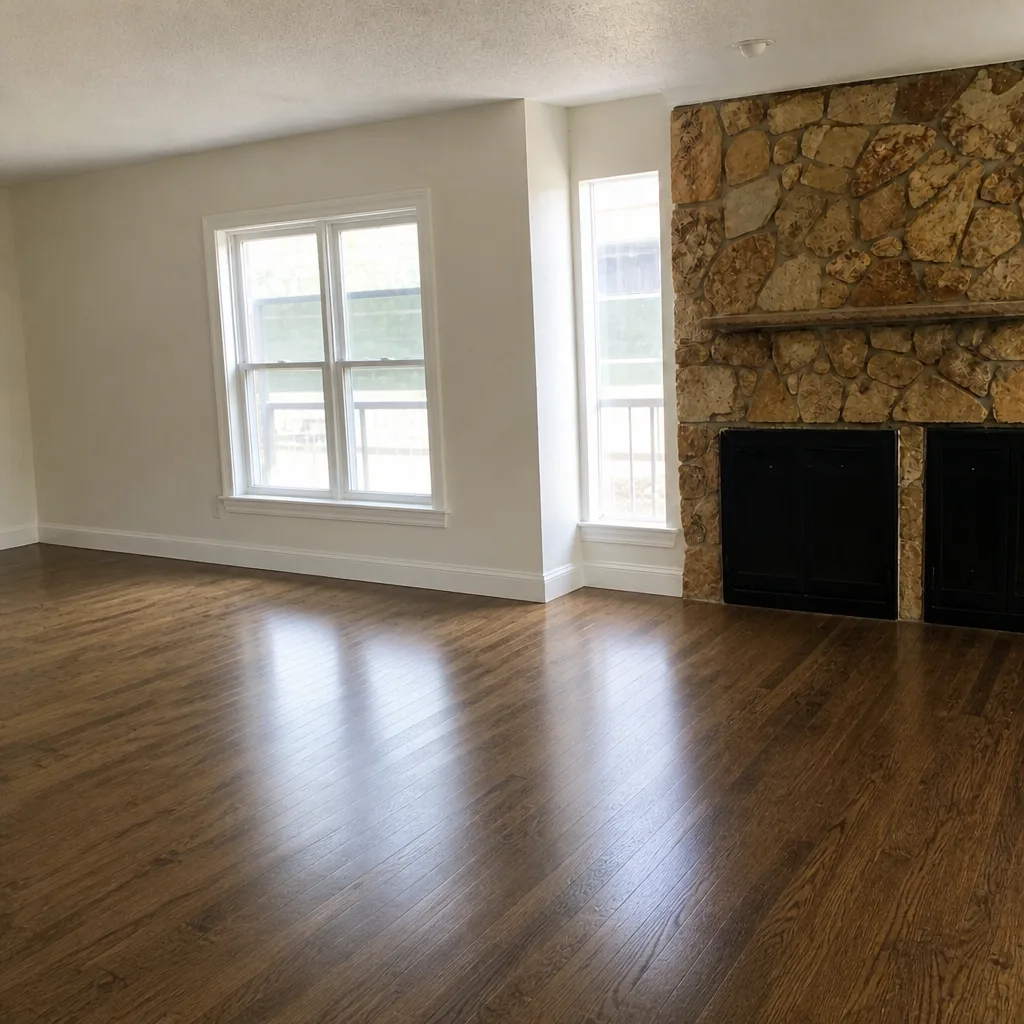 After
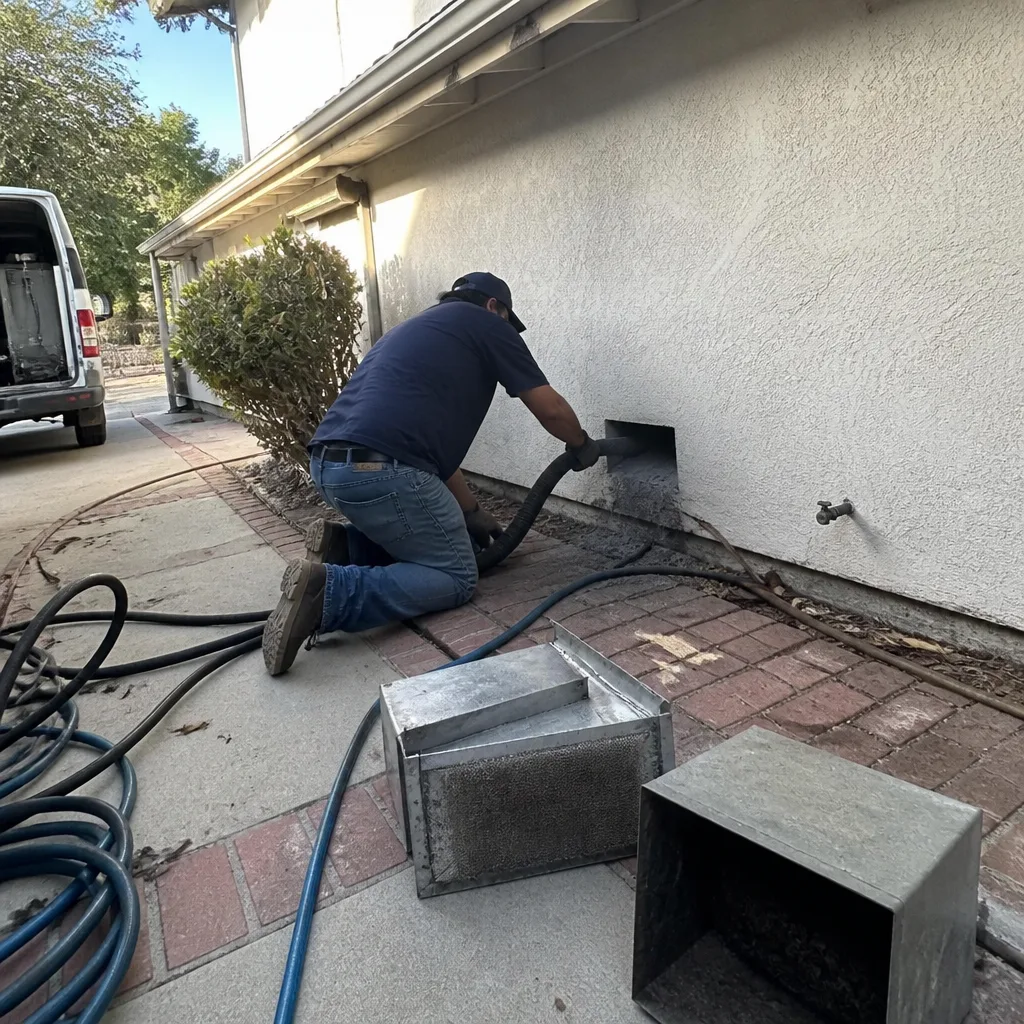 Before
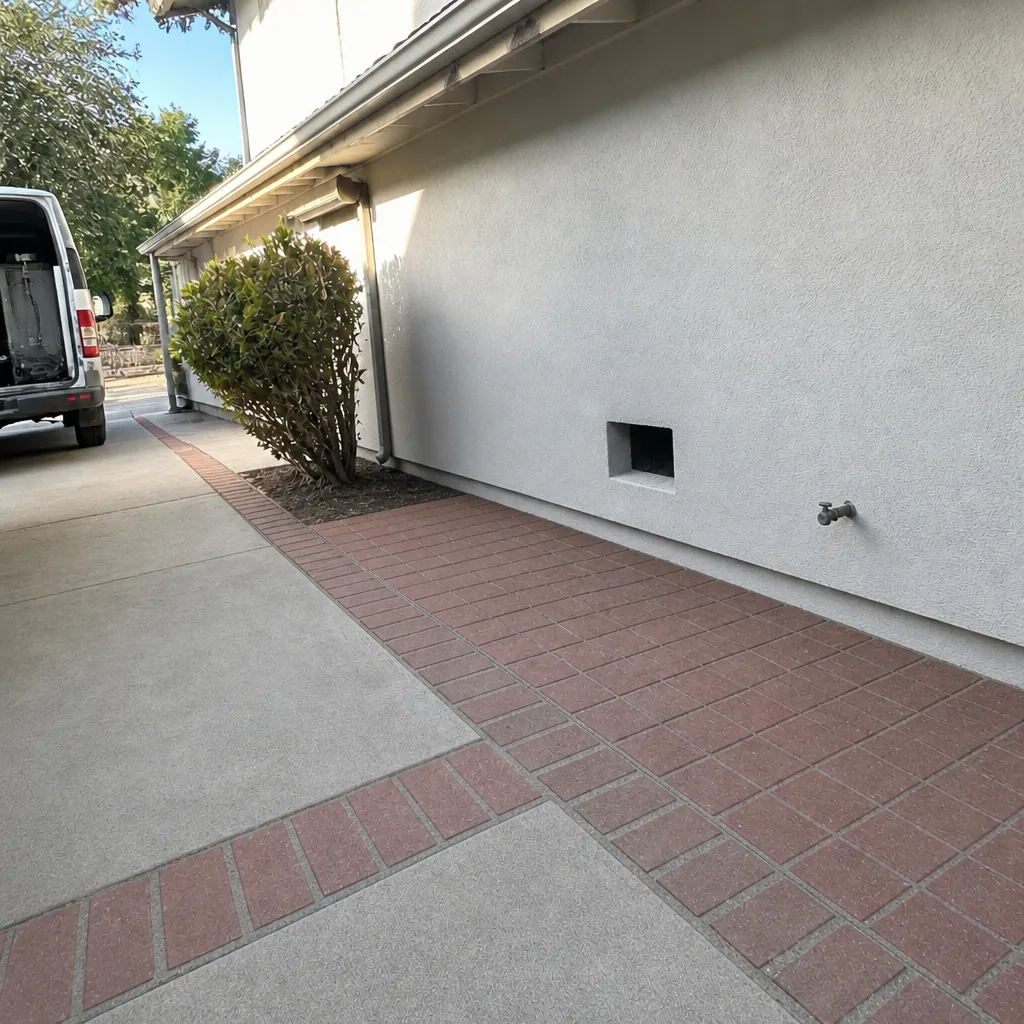 After
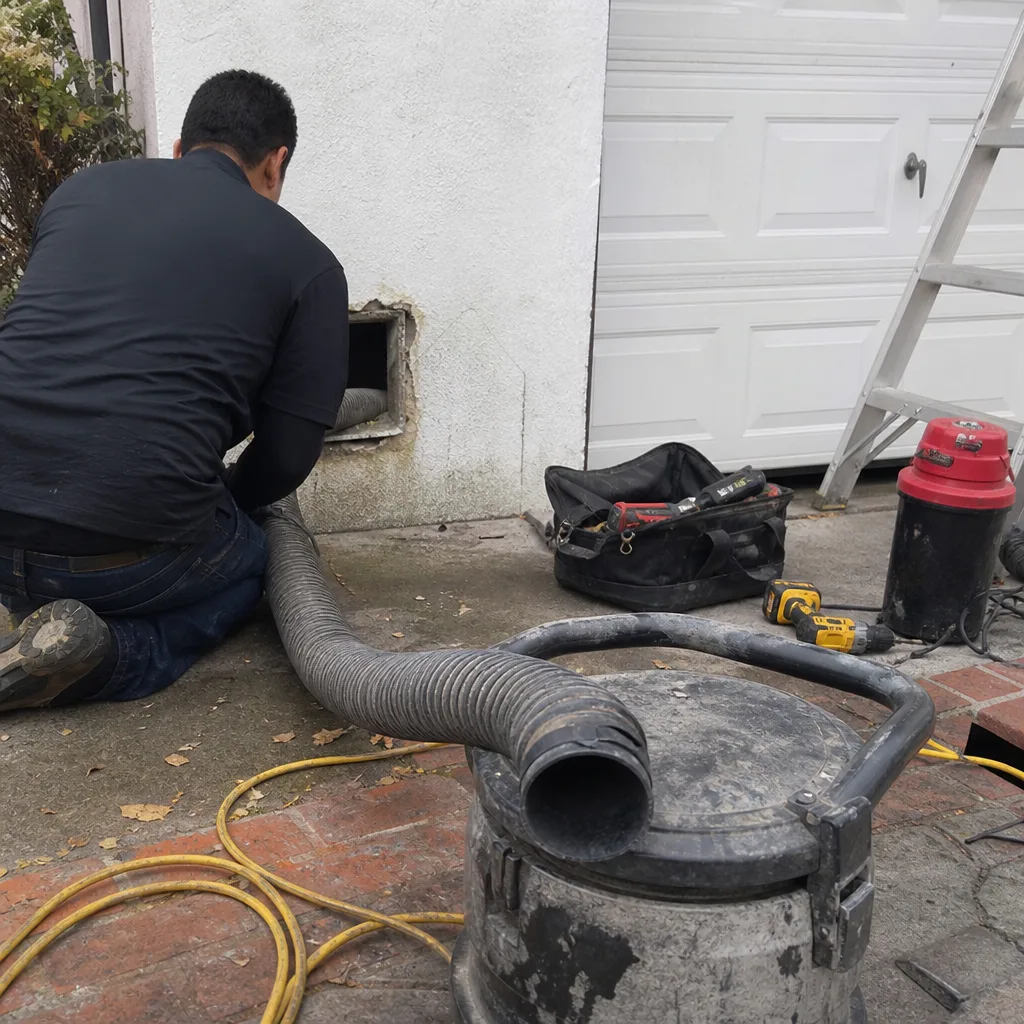 Before
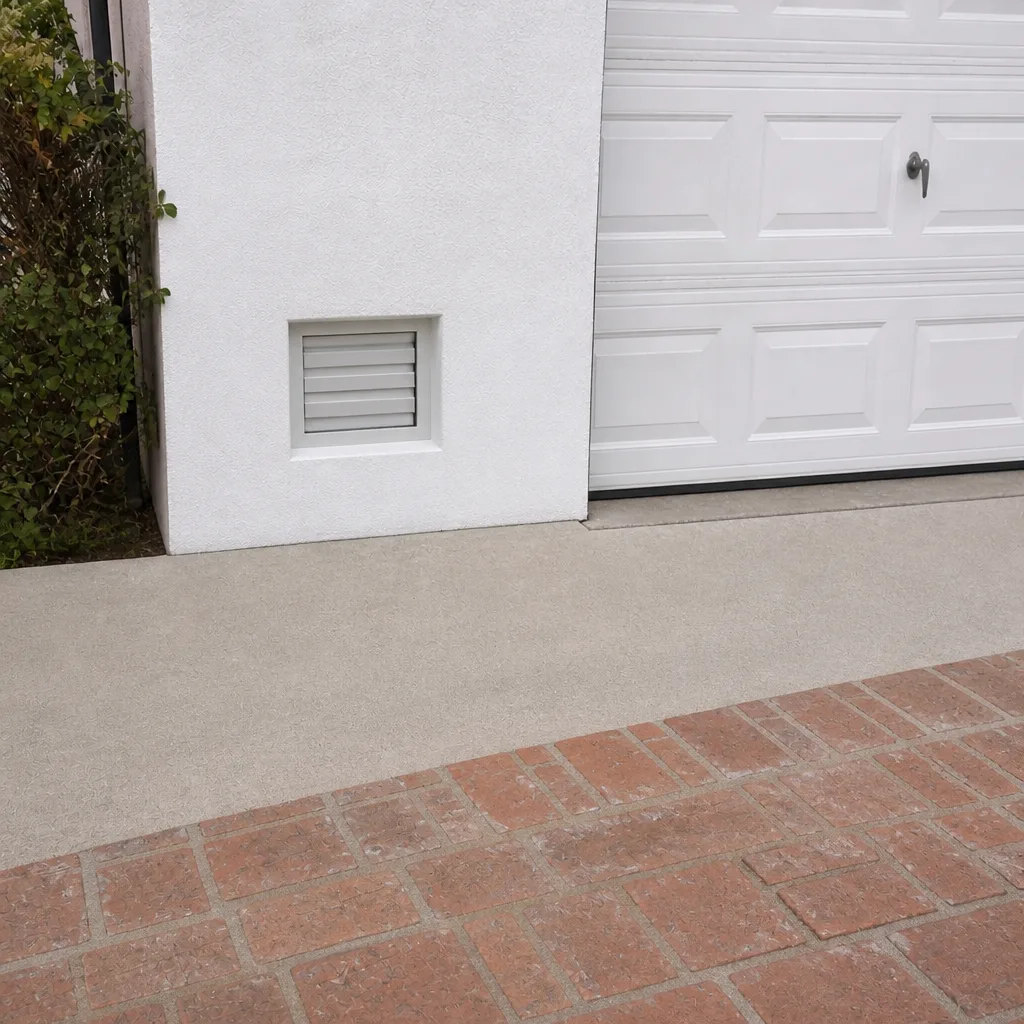 After
When to Call a Professional
Call a professional when you’re seeing debris blowing from the registers, when the system is drawing visible dust, when you’ve had water intrusion near the air handler, or when anyone has confirmed mold inside the ducts. Call before a remodel that will reroute ductwork. Call if you’re buying or selling an Encino home and the inspection report flags the HVAC system. And call when someone offers duct work that goes beyond cleaning, so you can verify who’s actually licensed to do it.
For straightforward dryer vent cleaning, the safety rationale is strong enough on its own: lint accumulation near the heat source is a fire hazard, and a clogged vent costs efficiency every cycle. That service doesn’t need a permit, but it does need to be done correctly.
Air Duct Cleaning Encino offers free estimates in Encino. Call (877) 492-1986. We answer 24/7. Fast dispatch from 7am to 7pm, Sunday through Friday.
Frequently Asked Questions
No, cleaning ducts doesn’t require a permit in Encino or anywhere else in Los Angeles. Cleaning is maintenance, not construction. Permits come into play only when ductwork is added, replaced as part of an alteration, or when HVAC equipment is installed or replaced. Call (877) 492-1986 for a free estimate and we’ll tell you which category your job falls into.
Duct cleaning alone doesn’t require a license under California law, but duct modification, replacement, and HVAC work require a C-20 license from the Contractors State License Board. If someone offers to replace sections or add a run, ask for the C-20. That single question separates a legitimate operation from a risky one.
Sealing existing duct joints with mastic or approved sealant is generally treated as maintenance and doesn’t require a permit. If the sealing is part of a larger alteration or accompanies replacement work, the permit picture changes. Ask the authority having jurisdiction for your specific address before approving significant work, or call us and we’ll walk you through what your job involves.
Pricing is per system, not per vent, and the written estimate sets the final number before work begins. We don’t quote a teaser price, and we don’t upsell on site. That’s the whole point of a written scope. Before you hire anyone, ask whether they price per system or per vent. Per-system pricing is honest pricing, and estimates are free. Call (877) 492-1986.
In our experience, the cheapest quotes usually reflect equipment that can’t do the job, no documentation, or a low headline price that expands once the technician is on site. The real cost is the second visit and the work that has to be redone. Ask about equipment by name and ask for before-and-after photos, then compare. Call (877) 492-1986 for an exact written estimate.
You know because you get documented evidence: before-and-after photographs of your own ducts, a written scope of what was performed, and a record of the equipment used. Verbal confirmation isn’t documentation. If your system includes air quality product lines like Honeywell or Aprilaire, that gets documented too. Ask any company to show you the photos before they leave.
Treat it as a remediation project with written documentation rather than a cleaning job. Expect containment, HEPA filtration, careful removal, and post-remediation verification. Ask the company what documentation they’ll provide and what clearance criteria they follow. Call (877) 492-1986 to schedule an inspection and free estimate.
The Bottom Line
Cleaning ducts is maintenance. Modifying, replacing, or remediating them is construction or remediation work, and California regulates each differently. The C-20 license requirement, the permit question, and the documentation standards for mold work aren’t bureaucratic noise. They’re what protects your equipment warranty, your liability position, and your sale price if the house changes hands. Encino homeowners who ask one clear question, which license covers this task, avoid most of the trouble. Our technicians have up to 13 years of experience and we handle duct repair and sealing in-house, so the job doesn’t stop at cleaning. Call (877) 492-1986 for a free estimate and a written scope.
Written by the team at Air Duct Cleaning Encino.