
Last updated November 22, 2026
 Whole-home duct cleaning
 Dryer vent cleaning
 Camera inspection
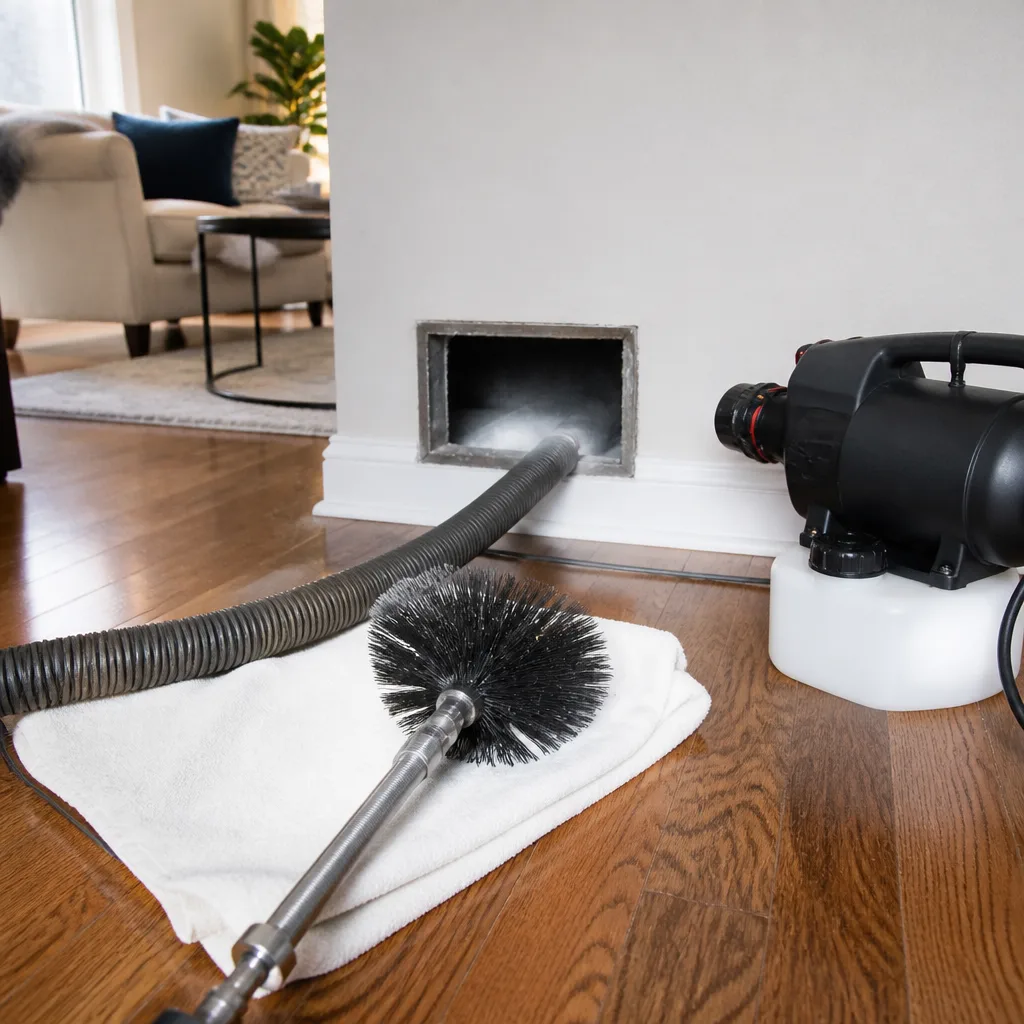 Sanitizing & deodorizing
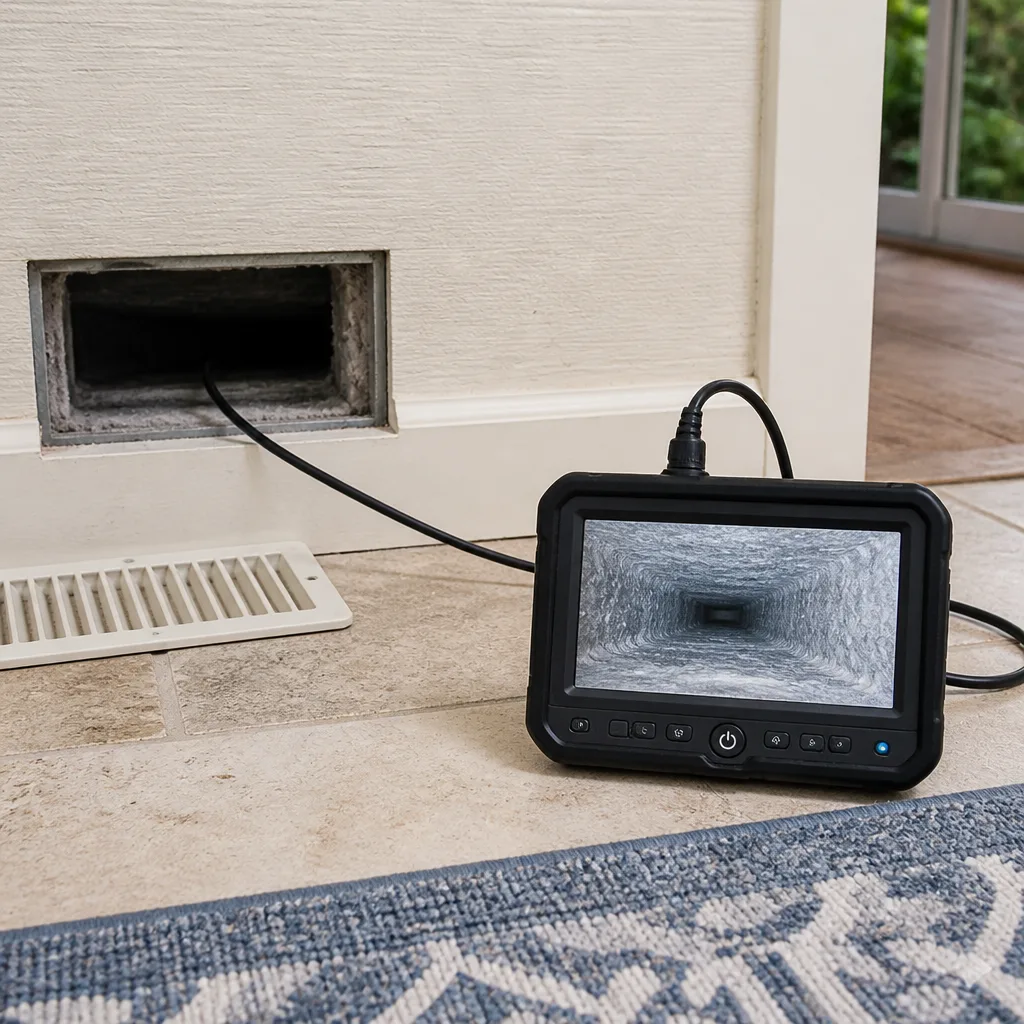
Whole-system duct and dryer vent check with before-and-after photos - you see exactly what came out of your vents
That "$99 whole-house special" is a bait ad - the real number appears once they are in your hallway, or the "clean" is a shop-vac at the register. We photograph the inside of your ducts before and after instead.
Air Duct Cleaning Cost Breakdown: The Encino Homeowner’s Reference for 2026
Two ads for duct cleaning can sit on the same screen in Encino and quote wildly different numbers. One says $89 for the whole house. Another says $1,200. They are not describing the same job, not the same equipment, and not the same depth of work. The low number often covers a quick pass on a handful of registers. The high number can cover a full forced-air system: trunk lines, branch runs, return plenums, the air handler cabinet, and the coil. Most homeowners never get a framework to tell which one their house actually needs, so they compare the two numbers as if they were the same thing. This guide lays out what each line on a legitimate quote covers, what typical Encino market ranges look like for 2026, and how to compare estimates apples to apples.
Quick Answer
A full-system air duct cleaning in Encino typically runs $475 to $1,100 for a standard single-story home, with larger multi-story or hillside homes and post-wildfire restoration work in the $1,100 to $2,500 range. Advertised teaser prices of $89 to $199 usually cover only a fraction of the system, often a small number of vents with no return work, no air handler, and no coil cleaning. The written estimate, not the ad, sets the final price.
Styles & brands we work with
- Whole-home duct cleaning
- Dryer vent cleaning
- Camera inspection
- Sanitizing & deodorizing
Table of Contents
- Why does the same house get quotes that differ five-fold?
- What should a line-item duct cleaning quote include?
- How do home size, story count, and attic access affect the price in Encino?
- Which add-on services are necessary and which are upsells?
- Why does post-wildfire duct cleaning cost more?
- How do you get a comparable quote from every contractor?
- Does equipment quality show up in the price?
- How often does a house in Encino actually need this done?
Why does the same house get quotes that differ five-fold?
The same 1,800-square-foot house in Encino can receive quotes of $199, $475, $800, and $1,400 in a single week. The spread is not a negotiation tactic. It reflects four things that vary enormously between providers: what the quote actually covers, what equipment the crew brings, how long they plan to spend on site, and whether the price is a teaser designed to be renegotiated once the technician is inside your home.
We’ve seen the pattern play out across Encino many times. A coupon arrives in the mail for $89. The technician shows up, opens one register, points at what looks like dust, and explains that the real job will cost considerably more. By then the visit is booked and the homeowner feels cornered into saying yes. That is a bait-and-switch model, and it’s the reason the duct cleaning trade has earned a reputation for surprises at the invoice stage.
A legitimate quote prices what a full-system cleaning actually involves. Here is what should be priced, line by line, and what drives the range:
- Number of supply registers and return grilles. A 1960s tract home in Encino might have fourteen supply vents and three return grilles. A hillside split-level with a second zone could have twenty-five. Each one takes time to remove, clean, and reset.
- Length and layout of trunk and branch lines. Long runs through a single-story ranch home are quick. Runs that snake through a hillside attic or a multiple-zone system need brush sections by the foot.
- Condition and accessibility of the air handler. Coils inside a closet-mounted unit are easier to access than coils in a tight attic space.
- Whether the quote includes returns and the air handler cabinet. Many low-priced quotes do not. Ours do, because cleaning only the supply side leaves the return plenum as a source of contaminated air.
- Whether HEPA containment, negative pressure, and disposal are included. This matters enormously after a fire in the surrounding hills.
The reason to ask for line items instead of comparing one bottom-line number is simple: five quotes that clearly say what is and isn’t included can be compared honestly. Five quotes that only show a total cannot. For an overall sense of scope before you start calling, our Air Duct Cleaning Encino page lays out the pieces we handle.
What should a line-item duct cleaning quote include?
A complete quote breaks the forced-air system into distinct work items, each with its own price. If a quote doesn’t do this, ask for it. Below are the line items a legitimate full-system cleaning should show, with typical 2026 Encino market ranges on a standard single-story home.
- Supply register removal, cleaning, and reinstallation. Typically $20 to $35 per register. Covers faceplates, grilles, and the visible interior of the boot.
- Supply branch runs. Typically $25 to $45 per run. Rotary brush with air whip on short branches, sectioned brush on longer runs.
- Main trunk line. Typically $120 to $280 depending on length and layout. The trunk carries the bulk of the airflow and collects the most debris; it should get the most time.
- Return plenums and return drops. Typically $90 to $220. Returns pull dust back into the system, and they are frequently the dirtiest part.
- Air handler cabinet and interior blower. Typically $65 to $150. The blower wheel accumulates dirt unevenly, which then throws the motor out of balance.
- Evaporator coil cleaning. Typically $95 to $220. This is a legitimate and often necessary line item, not an upsell. A fouled coil costs you money on every cooling cycle.
- HEPA containment and negative air setup. Typically $100 to $250 on a standard job, more for remediation-tier work. This is what keeps dust out of the room during cleaning.
Add those items up on a fourteen-register single-story home in Encino and you land in the $475 to $1,100 range for a full-system job. Every quote you receive should map to these same lines so you can see what is being dropped to hit a lower number. A key part of the answer is that air duct cleaning priced at $89 is not a cheaper version of the same job. It’s a different, much smaller job.
How do home size, story count, and attic access affect the price in Encino?
Square footage is the starting point, but layout matters more. Two homes of the same size in Encino can require two very different amounts of labor.
Encoder’s 1960s and 1970s tract housing around neighborhoods like Encino Village and Amestoy Estates is largely single-story ranch stock with straightforward central forced-air systems. Duct runs are short and the attic access is often a simple scuttle in a hallway closet. Jobs on this housing stock sit at the lower end of the market range.
Move up into the hillside streets or the hillside split-levels and the calculation changes. Split-level homes often have two separate system zones, which doubles the number of registers, returns, and trunks. Second-zone air handlers can be wedged into a low-clearance attic or a utility closet. Add heat gain in the Encino summer and the crew works around ladder time and ceiling clearances. That is where quotes move into the $900 to $1,400 territory for a full-system cleaning.
The other Encino-specific factor is attic temperature. Our summers push attic spaces well above 120 degrees, and crews working an hour or more in that attic need to plan for it. Time out of the attic to cool down is time off the job clock. That reality is baked into any honest quote from a contractor who has actually walked your attic and knows what a July afternoon looks like in an Encino ranch home.
If you’ve had an addition or a converted garage added in the last few decades, expect a third pricing variable. Those spaces often carry their own branch runs, and some are on separate mini-splits or wall units that don’t touch the main duct system at all. A careful quote notes those separately rather than guessing.
Which add-on services are necessary and which are upsells?
The add-on menu is where most duct cleaning quotes inflate. Some items are legitimate and warranted by what you own. Others are padding the invoice. Here is how we think about each one.
- Coil cleaning: usually legitimate. If the evaporator coil hasn’t been cleaned in several years, or if the home is near a construction project, cleaning it is part of a real HVAC tune-up. On a 1960s-era system, a fouled coil can drop cooling capacity noticeably. This belongs in most full-system quotes.
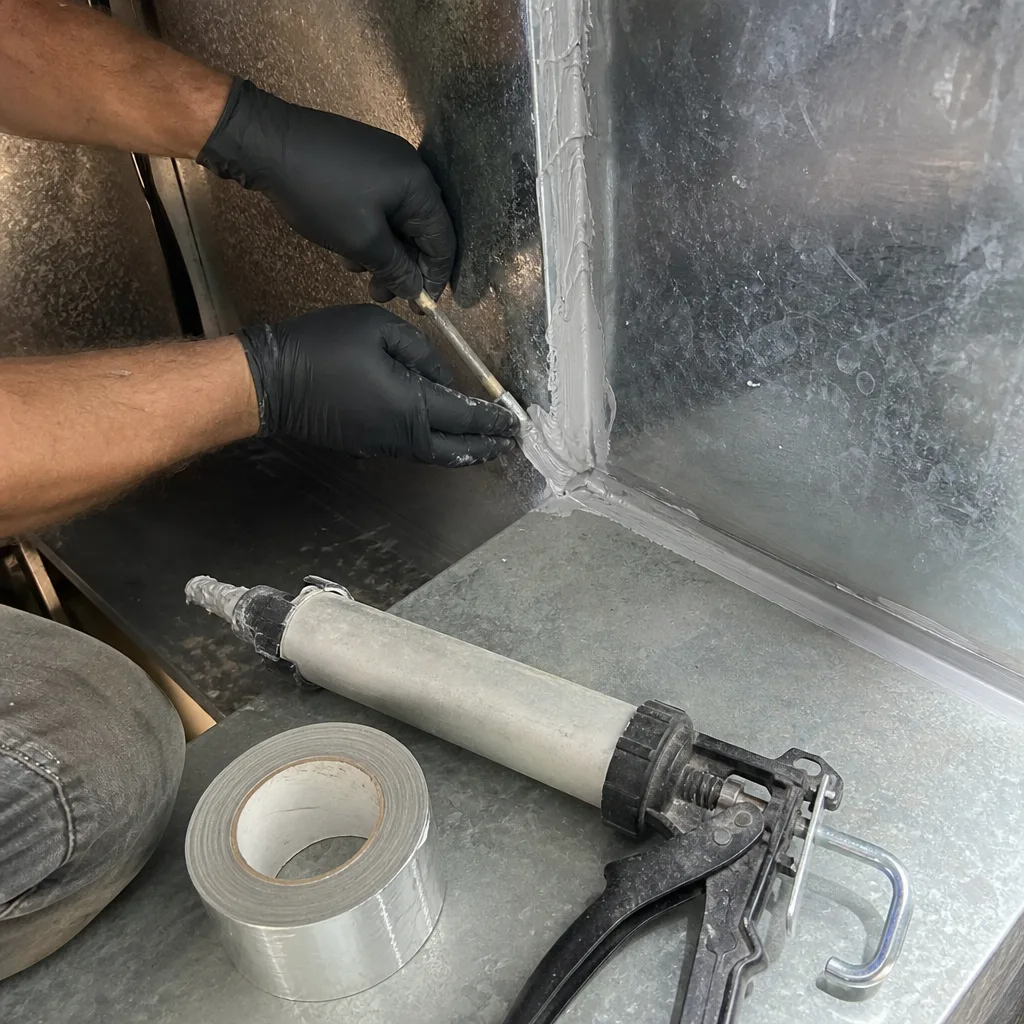
- Duct sealing: situational. If the technician finds disconnected joints, torn flex, or gaps in the trunk, sealing them is the difference between cleaning that sticks and cleaning that’s undone in a month. Our in-house Duct Repair & Sealing service lets us fix leaks during the visit rather than referring the work out. If you’re not being shown the leaks, though, ask to see them.
- UV light installation: situational. UV-C in-duct lights can help control biological growth on a coil that stays wet. They don’t fix dust, they don’t replace cleaning, and they don’t do anything for a dry duct system. Ask to see the coil condition first.
- Antimicrobial fogging: situational, with testing. Fogging is useful when there’s a documented problem: visible mold growth, a confirmed bacterial source, or a prior water event. Without a test or clear visual evidence, fogging is a product being sold, not a solution to a problem. Our Air Quality & Sanitizing service uses Guardsman-grade products for documented antimicrobial treatment.
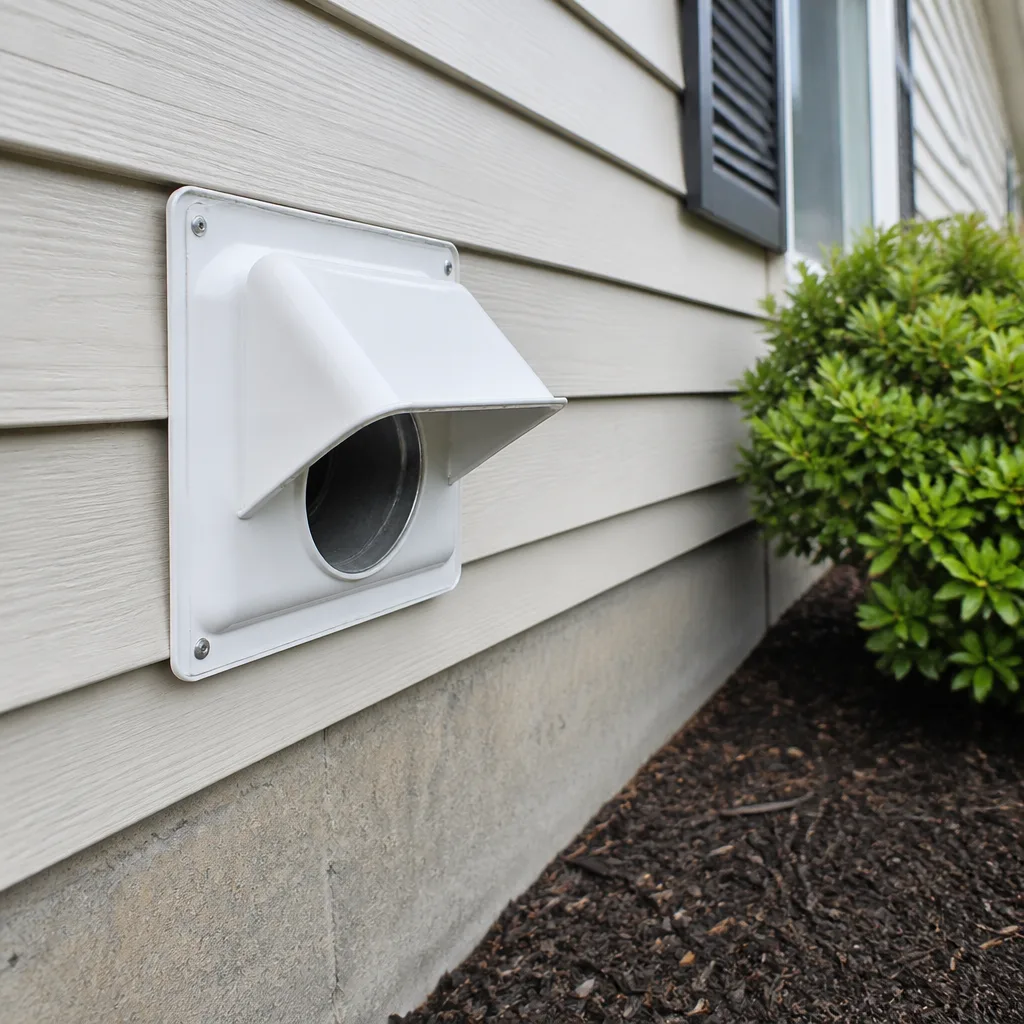
- Dryer vent cleaning: legitimate and often urgent. It’s a fire-safety service, not an upsell. Lint buildup in a dryer vent is a known fire hazard, and the same crew can usually handle it in the same visit. See our dryer vent cleaning page for what’s involved.
- Whole-home filtration upgrades: legitimate as a next step. Once the ducts are clean, adding a Honeywell or Aprilaire whole-home filter or humidity control system is a natural upgrade. Not a repair, but a prevention step.
Why does post-wildfire duct cleaning cost more?
After a wildfire in the surrounding foothills, the Encino airfield doesn’t just smell like smoke. It deposits fine ash and charred organic material throughout a home’s forced-air system. Cleaning ordinary dust is a maintenance job; cleaning fire residue is a restoration job. The scope, equipment, and time requirements are different, and the quote reflects that.
Here’s what the extra cost actually covers on a post-wildfire job:
- HEPA-grade containment and negative air pressure. The work area is sealed and put under negative pressure so that disturbed residue cannot escape into the living space. This setup alone adds hours of job preparation time.
- Abatement Technologies equipment and media disposal. Fire residue can’t be drummed up with a shop vac and dumped. Contained media has to be disposed of as remediation waste. Abatement Technologies equipment is the standard for that tier of work.
- Odor treatment throughout the system. Smoke odor lives in the walls of the duct, in the return plenums, and in the air handler insulation. Odor neutralization is a distinct line item.
- Sanitizing treatment with documented products. Guardsman-grade surface products give documented antimicrobial treatment across accessible interior surfaces.
- Coil and blower cleaning. Fire residue coats the coil and the blower wheel. Both have to be cleaned deeply, not just wiped.
- Verification and re-inspection. Post-remediation cleaning usually involves before-and-after documentation and possibly a post-clean air quality check.
That additional scope is why post-wildfire jobs in Encino commonly land between $1,100 and $2,500 for a full-system cleaning, depending on square footage and how much smoke penetrated the return system. A $199 coupon price is not remotely covering this work, and any contractor offering it for that price in the fire corridor is not doing the job.
How do you get a comparable quote from every contractor?
Comparable quotes require you to dictate the scope, not let the contractor define it. Before you call a single contractor, write down what you want priced. Then read the same list to each one and ask them to quote each line separately. A contractor who won’t quote line by line is telling you something.
Here is the checklist to bring to every call:
- Number of supply registers and return grilles in the home. Walk the house and count.
- Number of separate HVAC systems and zones. Split-levels and additions often have more than one.
- Whether the quote includes returns, the air handler cabinet, and the blower. Specify all three in writing.
- Whether the evaporator coil is being cleaned. Ask for a separate coil line item so you can compare apples to apples.
- Whether HEPA containment, negative pressure, and disposal are included. Non-negotiable on any post-fire or post-construction job.
- What equipment will be on site. A real rotary-brush system and a HEPA vacuum are the floor, not the ceiling. Ask what brand.
- Whether duct repair and sealing is priced as part of the job if leaks are found. Get the sealing rate, or a clear “we’ll quote it if we find anything.”
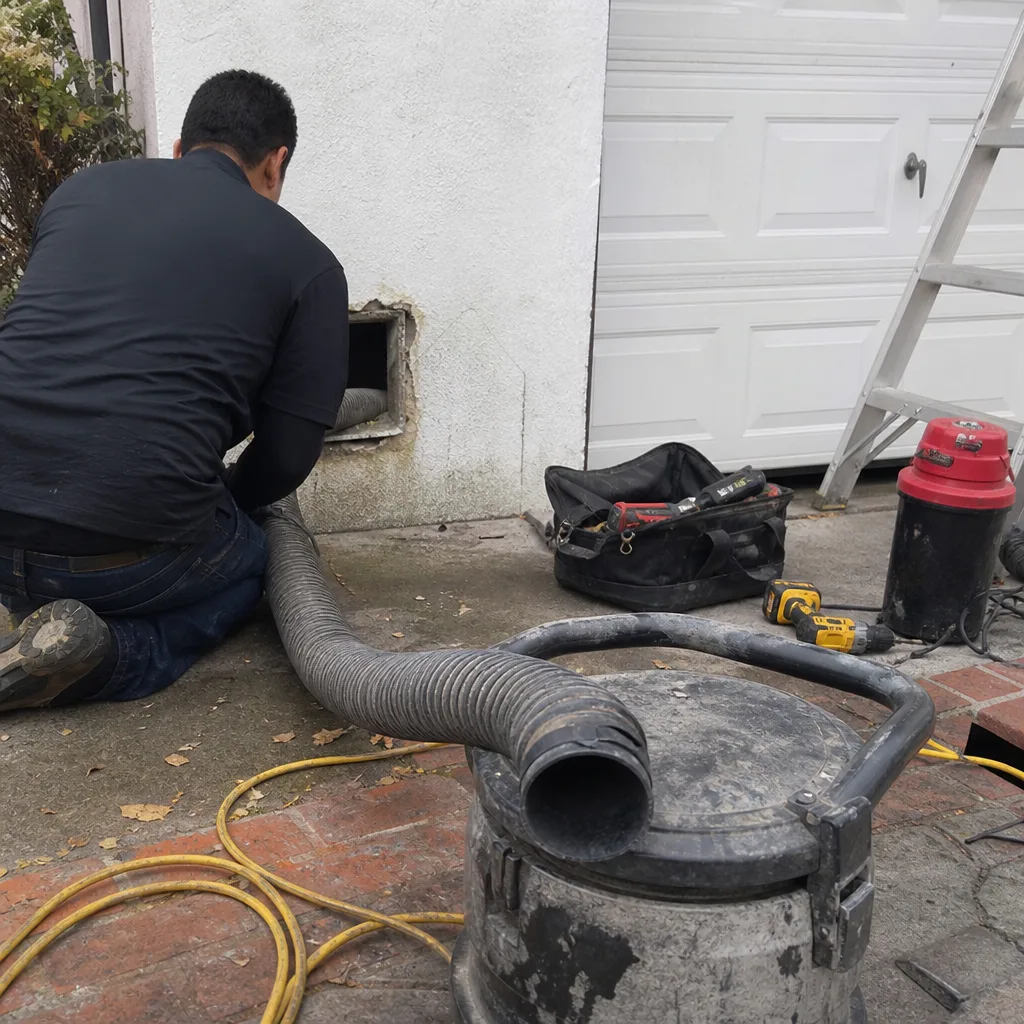
- What documentation you get at completion. Before-and-after photos of your own ducts, not stock photos.
- One flat price per system, agreed in writing before work starts. No per-vent math and no surprises at invoice time.
Three quotes that follow this template will read very similarly and can be compared honestly. Three quotes that don’t will look like three different jobs. Ours works this way by design: one flat price per system, in writing, before we start. Also worth doing in the same visit is HVAC cleaning for the air handler and coil; when the HVAC is already open for duct cleaning, the added time is modest compared with booking a separate visit.
Does equipment quality show up in the price?
Equipment is the single biggest reason two quotes for the “same” job come in far apart. A rotary-brush system and a HEPA vacuum are on an entirely different level from a shop vac with an extension hose. The equipment determines what actually gets dislodged and captured versus what gets loosened and left in place.
We use two professional-grade systems on every job, and they work together: a Rotobrush rotary brush to dislodge debris and a Nikro HEPA vacuum to capture it. The brush alone stirs up dust. The HEPA vacuum alone leaves adhered debris in place. Together, one dislodges and one captures, in a single pass. Those same systems are the standard specified in commercial duct cleanings under the NADCA method.
When the job calls for it, we also carry Abatement Technologies equipment. That’s remediation-tier air quality gear, and it’s what makes jobs with contamination concerns possible. Most residential duct cleaners don’t have it. If a quote doesn’t specify what’s going to be used on your home, ask. The equipment on the truck is the difference between the $199 version and the $800 version of the same square footage.
How often does a house in Encino actually need this done?
Every three to five years is the general guidance for a home with ordinary dust and no construction or fire events. Encino homes run a bit dirtier than that estimate for a few reasons.
First, the dry season and the Santa Ana wind events push fine dust into the return system. Second, many Encino homes have landscaping changes, additions, or nearby construction that drive construction dust into the ducts. Third, if anyone in the household has allergies, asthma, or other respiratory sensitivities, the practical interval drops. And fourth, cats and dogs in the house multiply the debris load considerably.
The signals that it’s time are easy to read from inside the house:
- Visible dust puffing out of registers when the system turns on
- A musty or smoky smell that returns whenever the air runs
- Visible debris or staining inside the return grille
- Uneven cooling between rooms (often a sign of duct leaks, not just dirt)
- A recent move-in, renovation, or wildfire nearby
None of these are emergencies, but each one is a reason to get the system looked at and priced honestly.
Common Mistakes to Avoid
- Comparing bottom-line prices without comparing scopes. A $199 quote and a $900 quote are rarely for the same work. Ask every contractor to quote broken down by system component so you can see what’s missing from the cheaper one.
- Booking on a coupon price without reading the fine print. If the ad promises $89 but doesn’t say what it covers, assume it covers very little. Ask which registers, returns, coils, and air handler are included in that price before you book.
- Assuming all duct cleaning uses the same equipment. A shop vac with an extension hose is not the same tier as a Rotary brush paired with a HEPA vacuum. Ask specifically what will be used on your system.
- Skipping the return side and the air handler. Cleaning only the supply vents leaves the return plenum, air handler, and blower untouched. That’s the same as cleaning half your house. Make sure those components are on the quote in writing.
- Not asking for before-and-after photos. Photos of your own ducts, taken during the visit, are the only way to know the work was done to the depth it was priced for. Stock photos prove nothing.
- Saying yes to sanitizing without a reason. Antimicrobial fogging makes sense when there is a documented problem. Without testing or a clear visual source, it’s a product on the invoice rather than a solution to a problem. Ask what evidence justifies the treatment.
- Ignoring dryer vent cleaning in the same visit. It’s a fire-safety service, and having it done while the crew is already on site is far more efficient than booking it during a separate visit.
See the difference
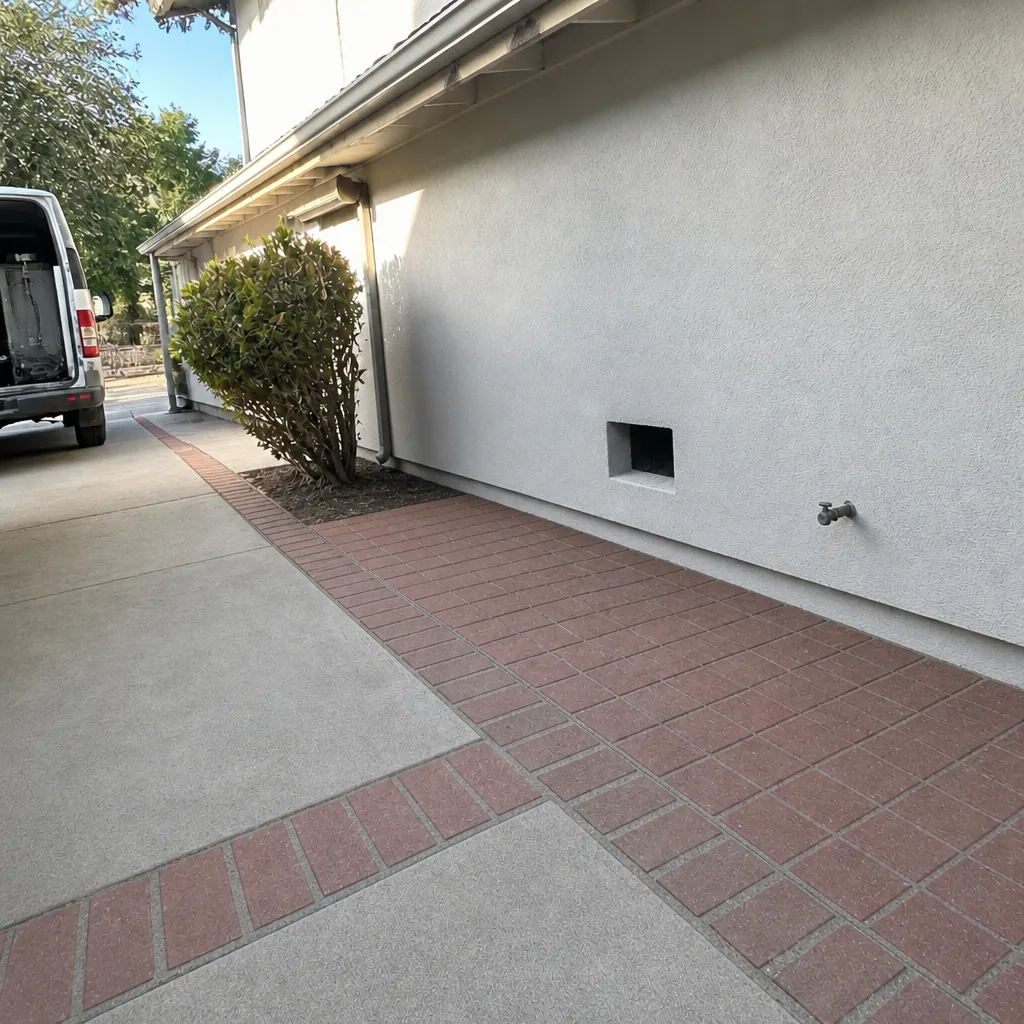
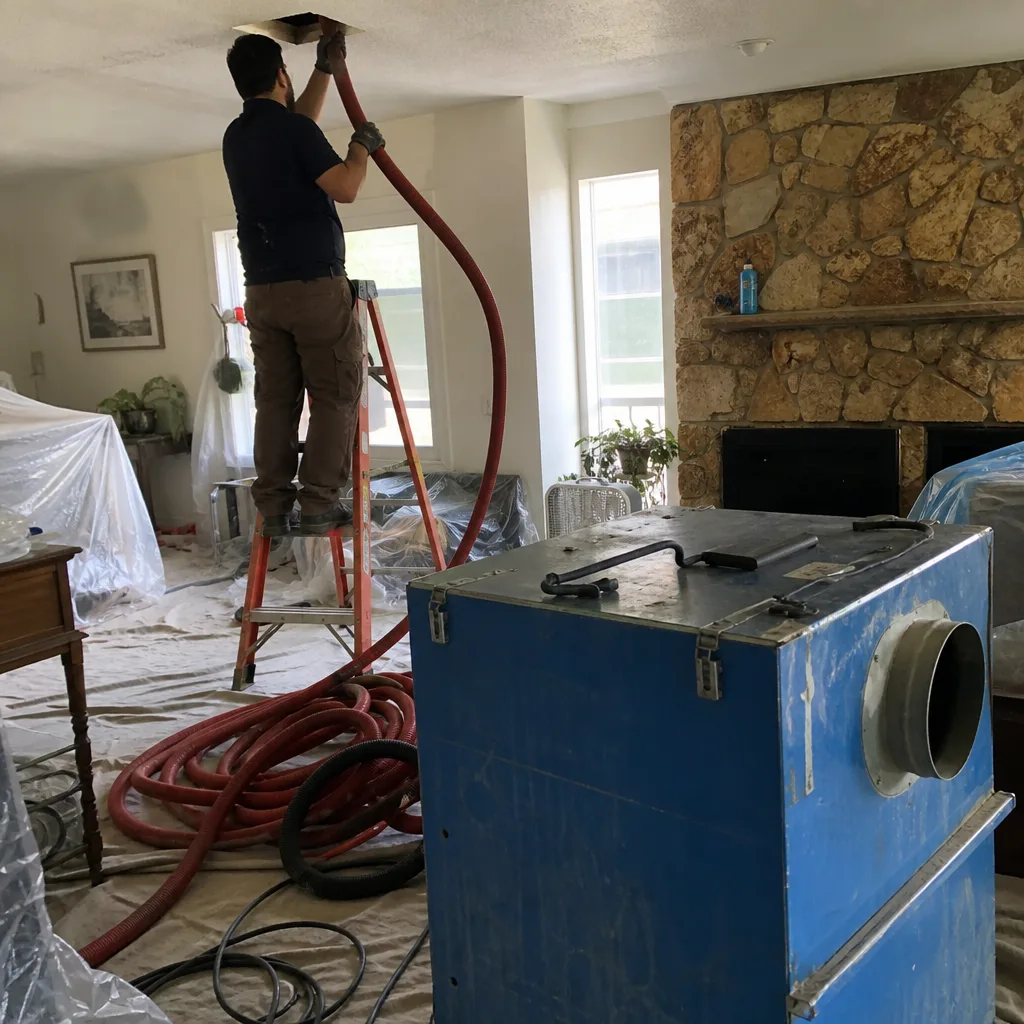 Before
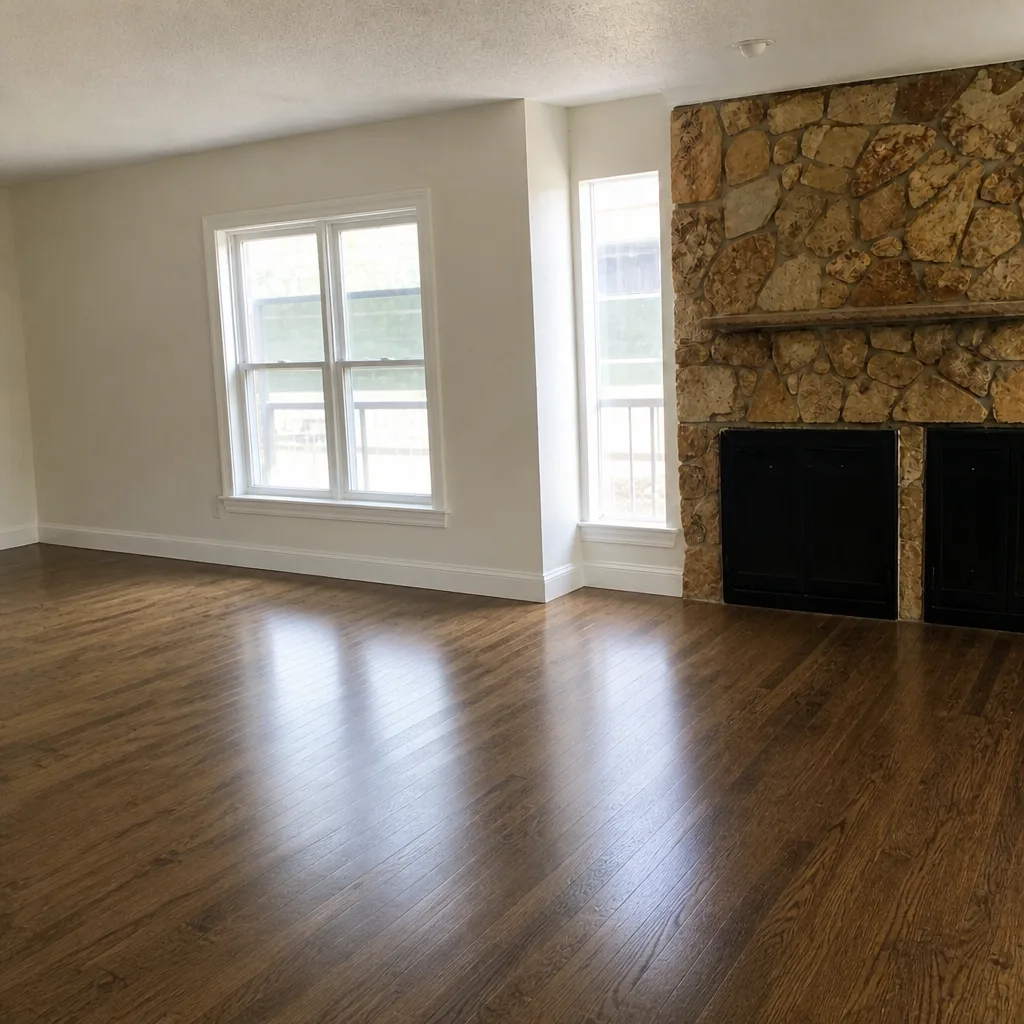 After
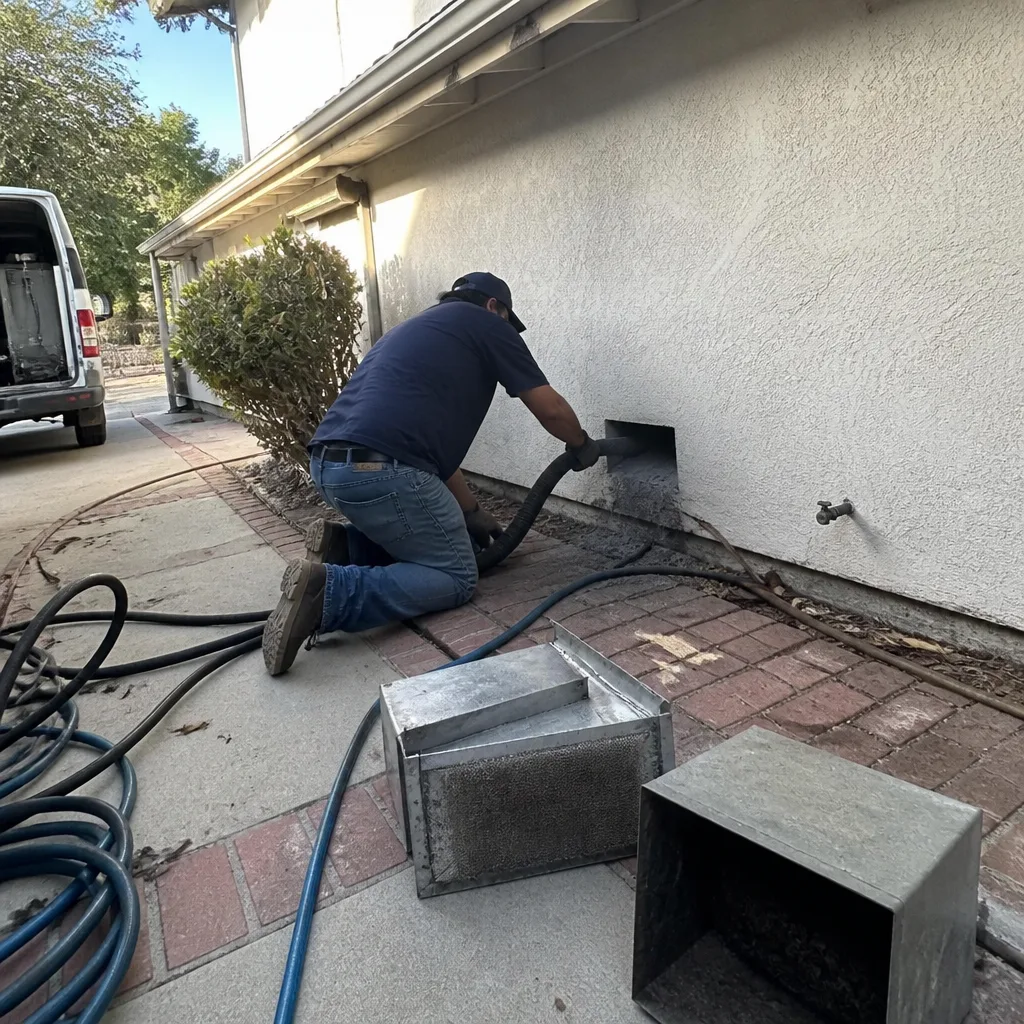 Before
 After
 Before
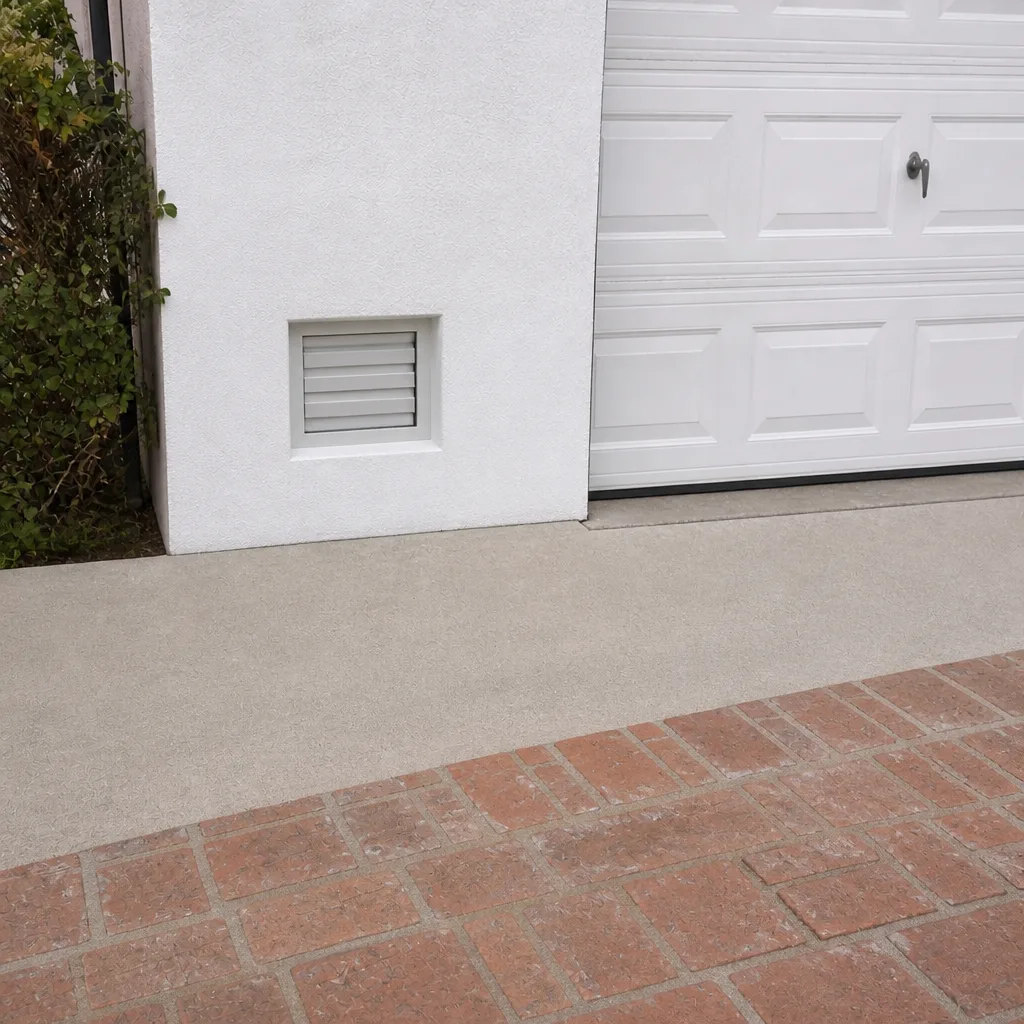 After
When to Call a Professional
Some duct problems are visible and easy to ignore until they aren’t. Call a professional when you’re seeing dust puffs from registers every time the system kicks on, when a musty or smoky smell returns with the air, or when you’ve moved into a home you haven’t seen a duct cleaning record for. After a nearby wildfire, after construction or an addition, or when someone in the household has respiratory sensitivities, have the system inspected and priced on its actual scope. The dryer vent is worth a professional look too if you haven’t had it cleaned in a few years; lint buildup is a known fire hazard. Air Duct Cleaning Encino offers free estimates in Encino. Call (877) 492-1986. We answer 24/7. Fast dispatch from 7am to 7pm, Sunday through Friday. Written by the team at Air Duct Cleaning Encino.
Frequently Asked Questions
Most full-system cleanings in Encino run $475 to $1,100 for a standard single-story home in 2026, with larger multi-story and hillside homes spanning $900 to $1,400, and post-wildfire restoration work in the $1,100 to $2,500 range. The written estimate, not the advertised price, sets the final cost. Call (877) 492-1986 for an exact quote; estimates are free.
Cheap quotes usually leave out the return plenums, the air handler, the blower, and the evaporator coil, and they often skip HEPA containment and media disposal. The cheaper job is a much smaller job, not the same job at a lower price. Ask each contractor to quote broken down by component so you can see what’s actually missing. Call (877) 492-1986 to compare our line-item quote against any other.
The reliable proof is before-and-after photos of your own ducts, taken during the visit, plus a written record of what components were cleaned. Stock photos and verbal assurance are not proof. Call (877) 492-1986 and ask us how we document a job from start to finish; estimates are free.
Every three to five years for a typical home, but Encino winds push fine dust into the return system faster than that, and pets, construction, or household respiratory sensitivities shorten the interval. Visible dust from registers, a recurring smell, or a recent fire are each a reason to have the system inspected. Call (877) 492-1986 for an honest read on whether your home needs it now; estimates are free.
Sometimes. If the technician shows you disconnected flex, torn joints, or gaps in the trunk, sealing is worth doing at the same visit because uncleaned leaks undo the cleaning within weeks. If you’re not being shown the leaks, ask to see them. Ours is done in-house, not referred out.
Yes, because the scope is genuinely larger: HEPA containment and negative pressure, Abatement Technologies equipment, contained media disposal, odor treatment across the system, deep coil and blower cleaning, and verification documentation. That extra scope is why post-fire jobs commonly land between $1,100 and $2,500. Call (877) 492-1986 for a scope-specific estimate; estimates are free.
The Bottom Line
The advertised price and the real price for duct cleaning in Encino are rarely the same thing, and the gap is almost always a difference in scope, not a difference in quality of the same job. Compare quotes by line item, not by total: registers, branch runs, trunk lines, returns, air handler, blower, coil, containment, and equipment brand. Add-ons like coil cleaning and dryer vent cleaning are legitimate; antimicrobial fogging without a documented problem is not. Post-wildfire work is genuinely more expensive because it involves remediation-grade scope. Get it in writing: one flat price per system, before-and-after photos of your own ducts, and a written estimate that sets the final price. That framework protects you from the coupon-to-invoice surprise, no matter which contractor you call.
Air Duct Cleaning Encino works with homeowners, landlords, and property managers across Encino using professional-grade equipment and full in-house duct repair and sealing. For a free, line-item estimate on your home, call (877) 492-1986. We answer 24/7. Fast dispatch from 7am to 7pm, Sunday through Friday.
Written by the team at Air Duct Cleaning Encino.