
Last updated November 22, 2026
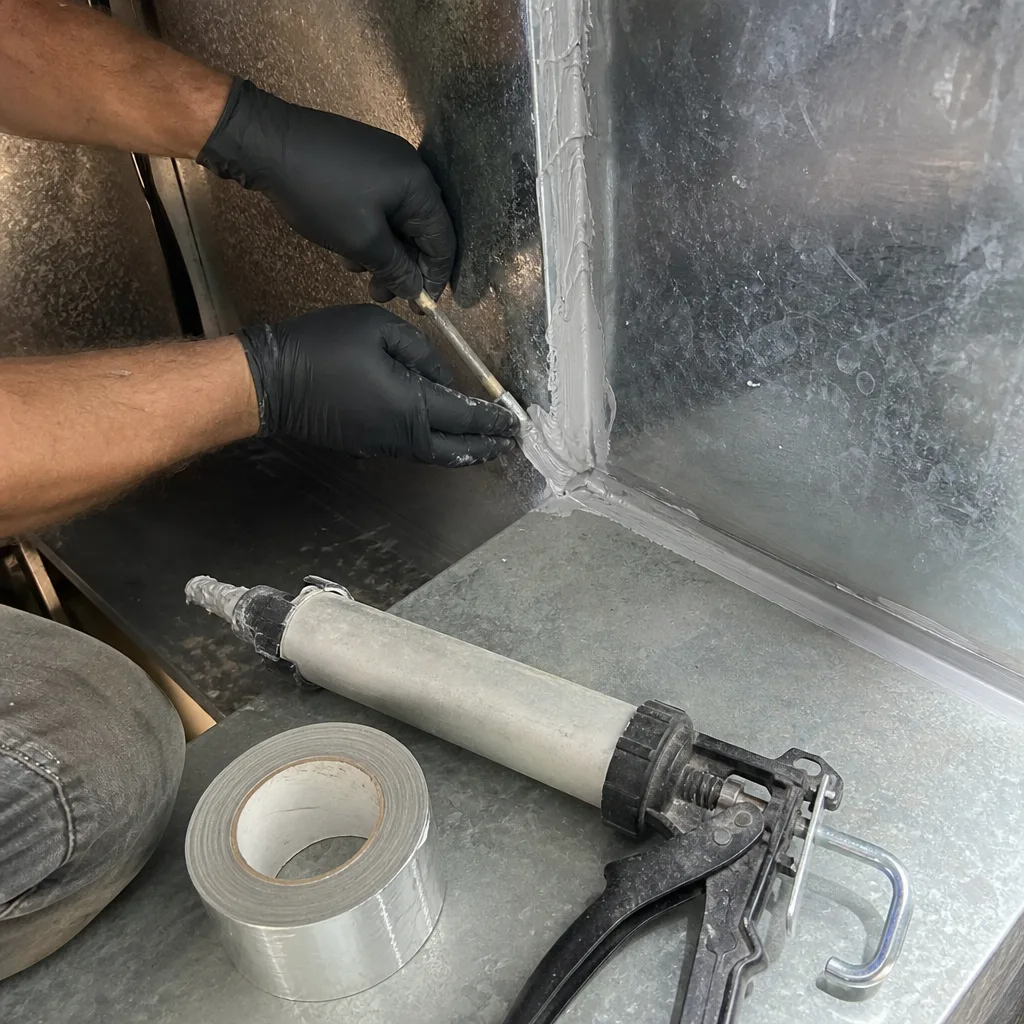
 Whole-home duct cleaning
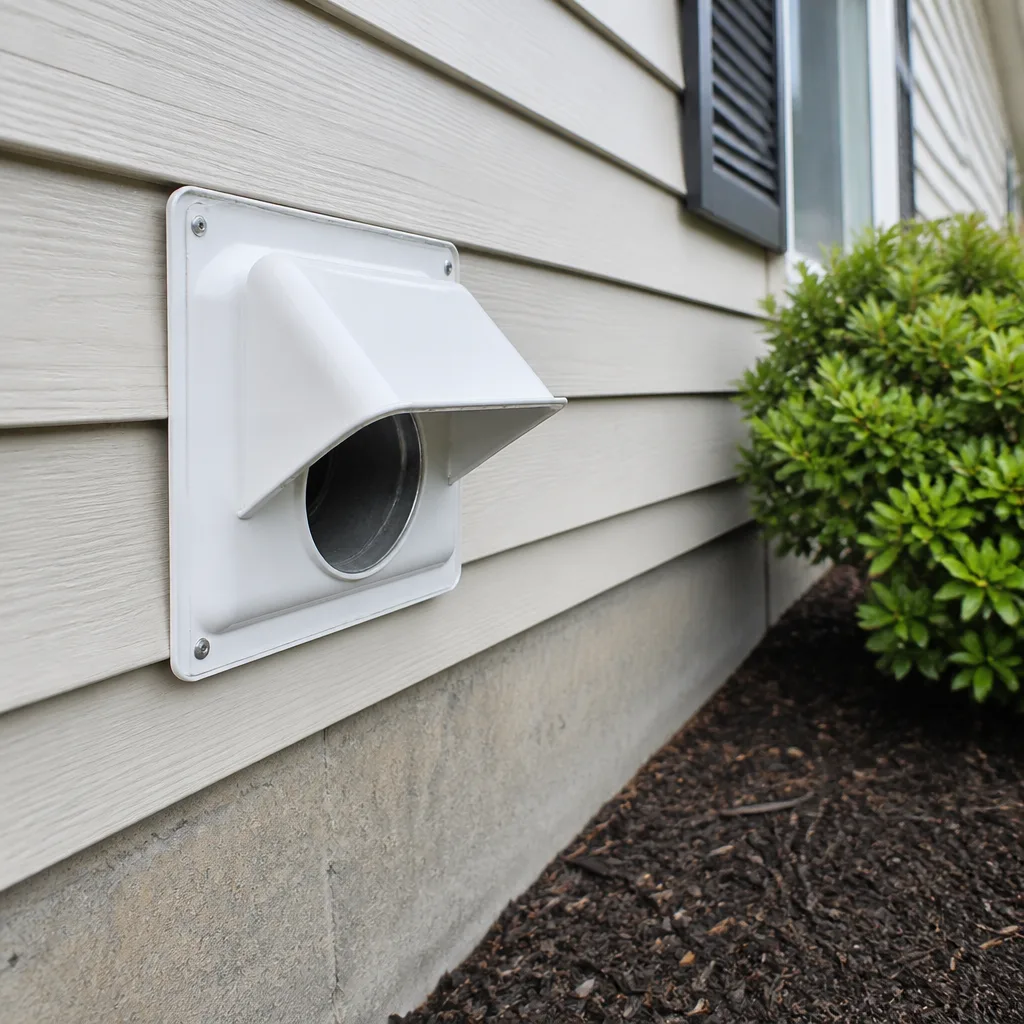 Dryer vent cleaning
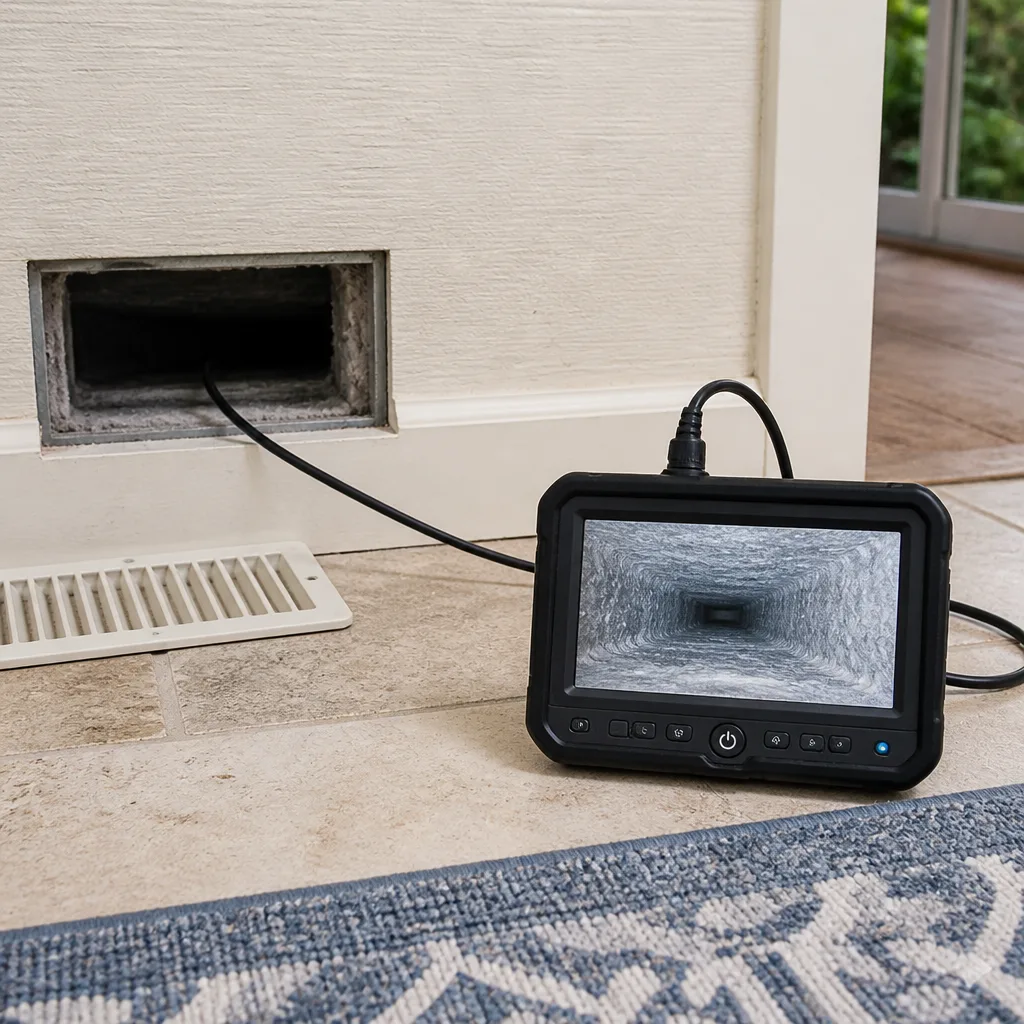 Camera inspection
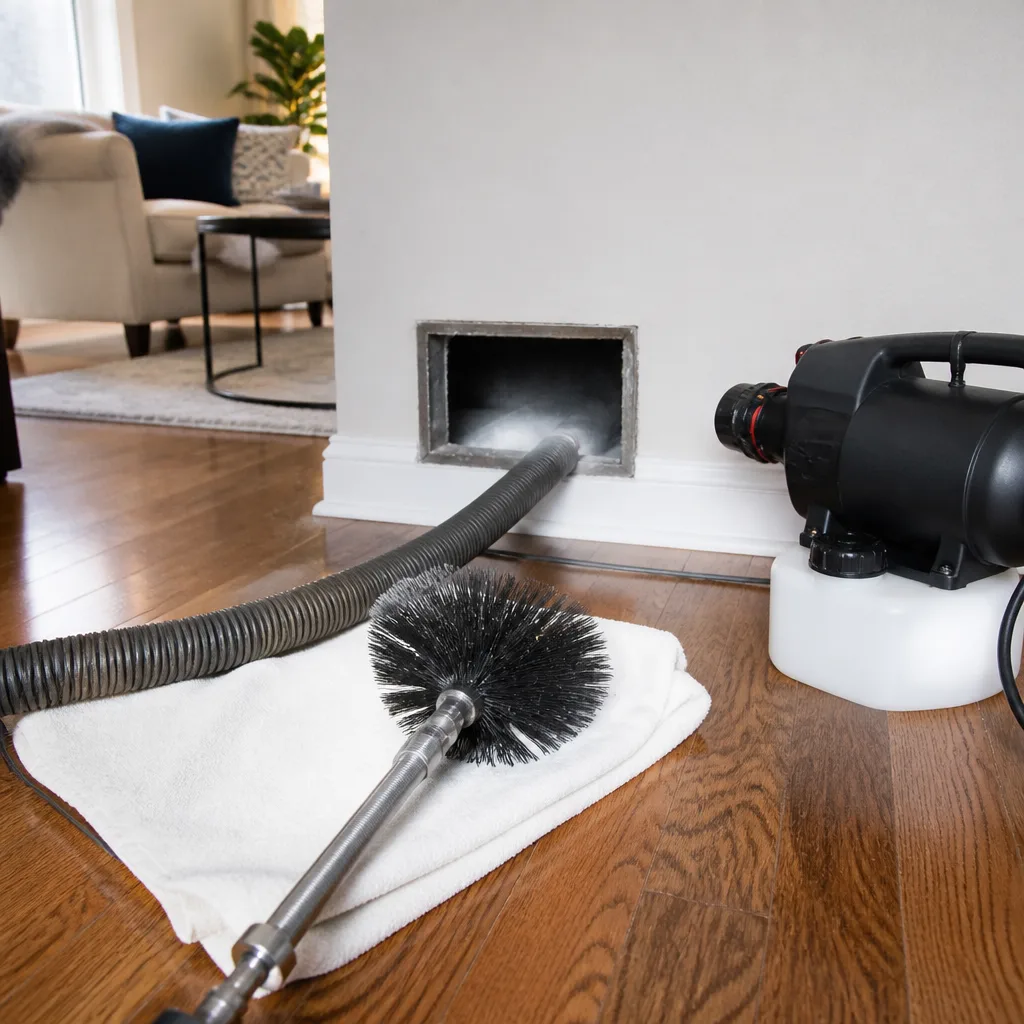 Sanitizing & deodorizing
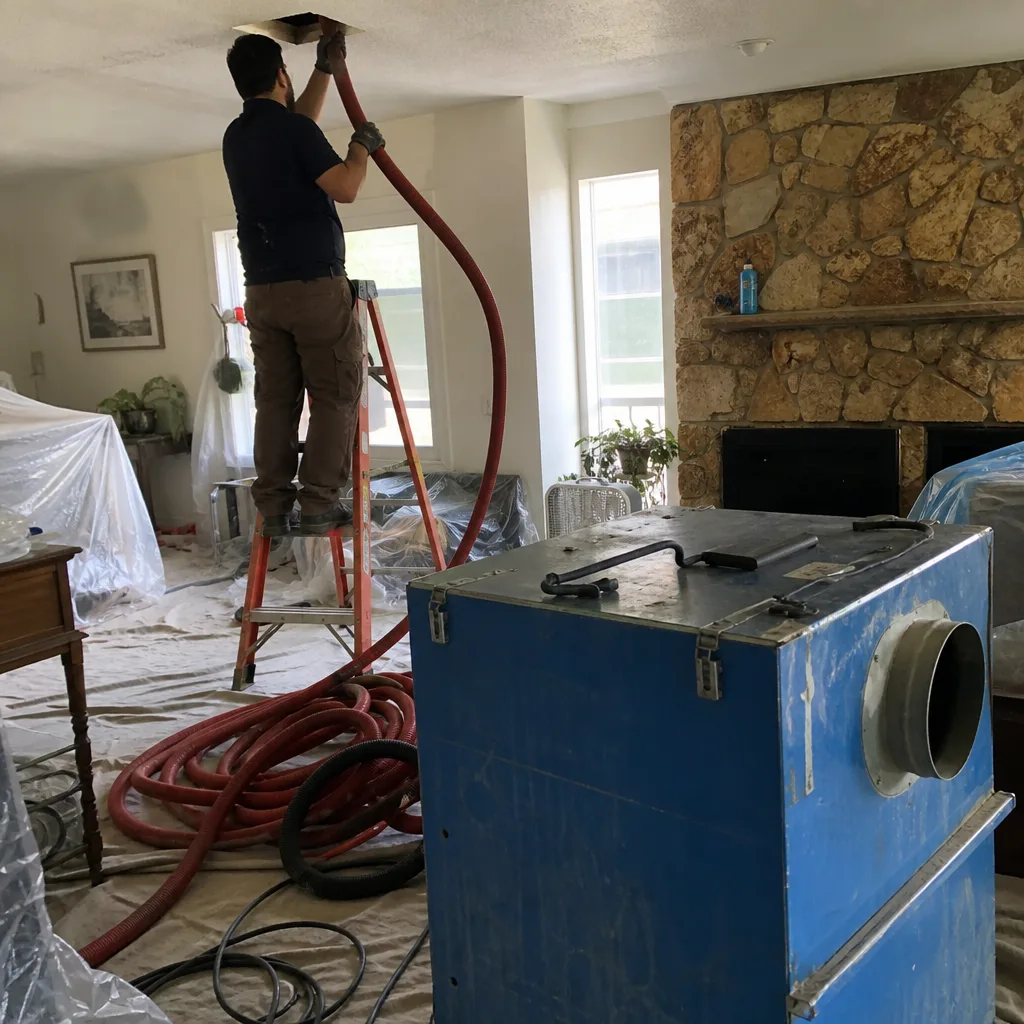
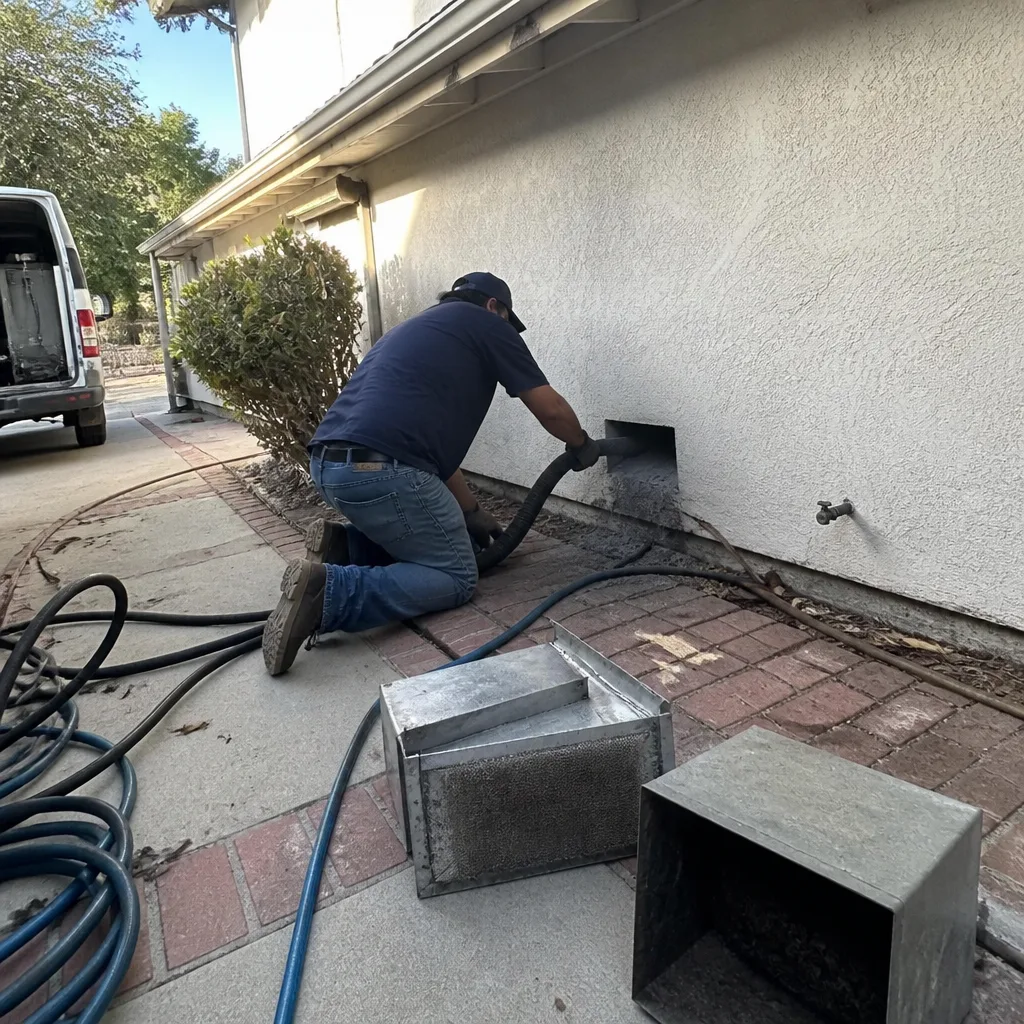
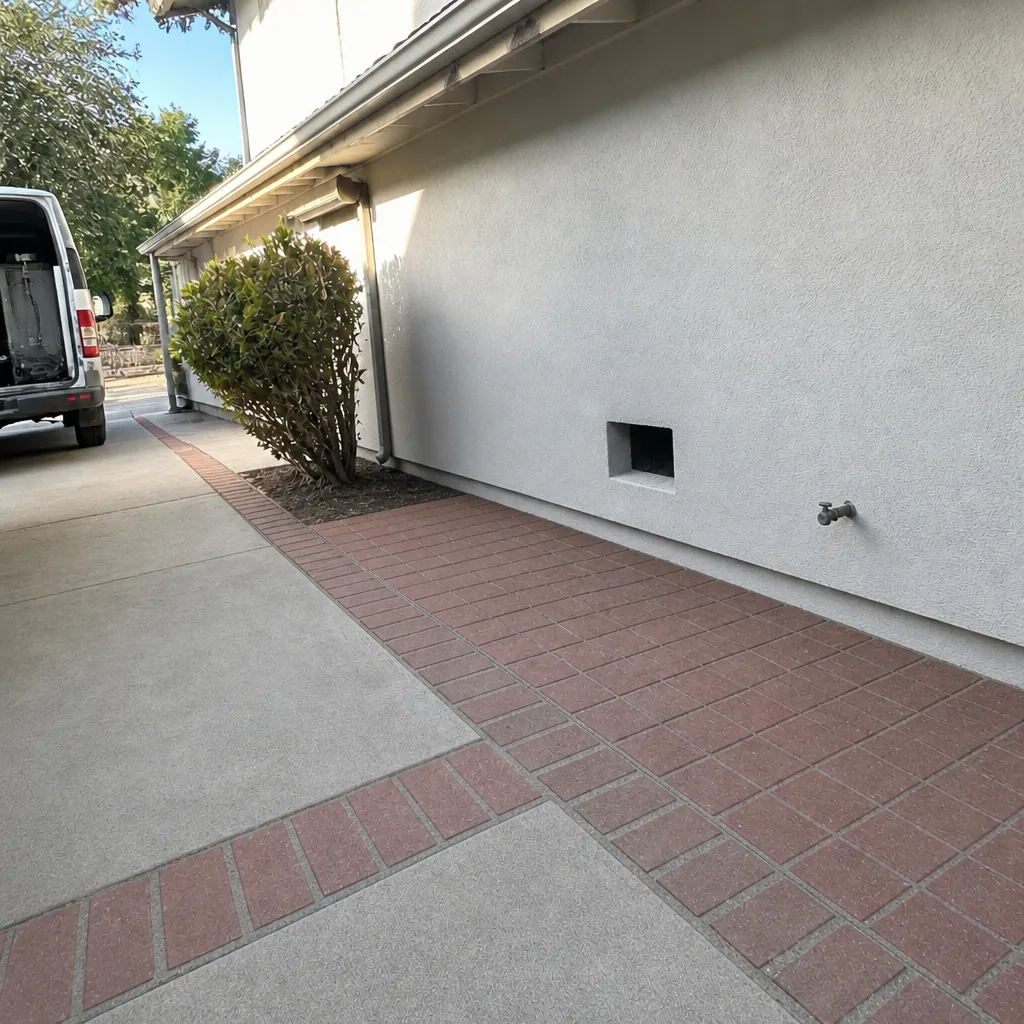
Whole-system duct and dryer vent check with before-and-after photos - you see exactly what came out of your vents
That "$99 whole-house special" is a bait ad - the real number appears once they are in your hallway, or the "clean" is a shop-vac at the register. We photograph the inside of your ducts before and after instead.
Air Duct Cleaning Warning Signs: An Encino Homeowner’s Reference Guide
A musty smell drifting from your supply vents and a hot, burning smell from the same vents are both duct warning signs – but they point to completely different problems with completely different fixes. One usually means moisture and biological growth somewhere in the system. The other is often an electrical or mechanical issue inside the air handler itself. Conflating the two is how homeowners here in Encino end up paying for sanitizing treatments when what they actually needed was a service call on the furnace. This guide maps each warning sign to the component it points at, so you can describe what you’re seeing in plain terms and get the right work done, nothing more.
Quick Answer
The most reliable air duct cleaning warning signs in Encino are visible dust blowing out of supply vents shortly after the system starts, a persistent odor that returns within hours of cleaning, uneven room temperatures that don’t match the thermostat setting, and health symptoms that clear up when you’re away from home. The warning signs that matter less are a one-time dust puff at startup and a general smell you can’t pin to any room. Matching the sign to the cause is what separates a needed cleaning from an unnecessary add-on.
Styles & brands we work with
- Whole-home duct cleaning
- Dryer vent cleaning
- Camera inspection
- Sanitizing & deodorizing
Table of Contents
- The Symptom-to-Cause Map
- What Duct Odors Tell You, and What They Don’t
- Dust Patterns and How to Read Them
- Uneven Room Temperatures: Sealing Before Cleaning
- Wildfire Smoke Odor That Won’t Leave
- Health Symptom Patterns Worth Paying Attention To
- Contractor Red Flags: When Urgency Is Manufactured
- When to Call a Professional
The Symptom-to-Cause Map
Most articles treat every warning sign as a reason to book a cleaning. That’s not how a system actually fails. Here’s how we read the common signs, and what each one points to:
- Dust blowing from supply vents after long idle periods: often normal. Between cycles, air settles and collects dust that then puffs out when you turn the system back on. This is a warning sign only if it happens every single cycle, or if the dust is heavy and dark.
- Visible buildup at the return grille or on the register slats: points to a dirty filter, a filter that’s too thin for the home, or a bypass gap that lets unfiltered air past the frame.
- A musty, earthy smell from one room’s vents: points to moisture somewhere on that branch. Often it’s condensation at a poorly sealed fitting in a way a full cleaning won’t fix.
- A uniform delay in airflow from one zone: points to a leak or a crushed flex duct, not to dirt. Ducts that have lost their insulation or been pinched by construction often look like a cleaning problem and are actually a repair problem.
- A rattle, hum, or whoosh that starts at the air handler: points to blower blades out of balance, a loose panel, or a failing motor, not to duct contamination.
That’s the whole point of this guide. A duct issue you can describe accurately is a duct issue a professional can quote accurately. A symptom you can’t describe clearly is the one that gets upsold. In Encino, where a lot of housing stock was built out over decades with a mix of forced-air systems that have been retrofitted more than once, mismatched component age is common. That makes the mapping more useful, not less.
What Duct Odors Tell You, and What They Don’t
Odor is the warning sign homeowners fixate on, and it’s also the one most easily misdiagnosed. Different odors mean different things, and the categories matter more than the intensity.
- Musty, damp, cellar-like: usually moisture-driven. Culprits include a wet filter, a drip pan that isn’t draining, or condensation at a fitting where cool air meets warm attic air. Cleaning may help with the symptom, but the moisture source has to be corrected first.
- Hot, sharp, or burning: usually a mechanical or electrical issue. A failing blower motor, a loose belt, or a wiring problem inside the air handler. Stop running the system and get it checked. This is not a duct cleaning call.
- Chemical or plastic-smelling: often a new component off-gassing, or a smell drawn in from an attached space like a garage or an adjacent unit. Point-of-origin tracking matters here, not cleaning.
- Smoky and persistent: discussed in the wildfire section below. It behaves differently from surface dirt.
We’ve learned to ask where the smell is strongest, and when. A smell that’s worst in one room tells a very different story from a smell that’s uniform at every register. A smell that’s worst when the fan starts points at a specific cause, while a smell that’s just “always there” points at another. Those clues do most of the diagnostic work. Air notes and image comparisons between registers help homeowners describe the pattern accurately.
Dust Patterns and How to Read Them
Dust is the most common complaint we hear from Encino homeowners, and also the one with the most false alarms. Read the pattern, not just the presence.
- Check the filter first. A filter that’s visibly caked, or that’s gone soft at the edges and lets air pass around it, is doing almost nothing. Replace it and see how the next few weeks go before assuming the ducts are the problem.
- Note which registers produce the dust. Every register, or a subset? An upstream return problem affects every room. A single-register problem points to a branch-level leak or a fitting that’s come apart.
- Look at the color. Pale gray house dust is normal in any home. Dark gray or black dust that smears is a sign of moisture mixing with dust, or of a contaminated return path.
- Check the space around the air handler. A filter that fits loosely, or a bypass gap in the cabinet, will pull unfiltered return air around the filter and dust the system continuously. This is a repair fix, not a cleaning fix.
- Check the dryer vent separately. Dryer vent dust is fine and light-colored, and it’s not part of the duct system. If a cleaner quotes you a single combined rate to “clean the ducts and the dryer vent” without inspecting either first, that’s a quote written before the diagnosis.
For a full list of the components that should be included in a professional cleaning – supply, return, right through the air handler – we’ve written a longer piece on Air Duct Cleaning Encino that walks through the scope. What matters here is that “dusty vents” is a symptom that usually resolves with a filter change, a bypass fix, and a thorough cleaning, in roughly that order. If a cleaning is quoted as the very first fix with no inspection of the filter, the cabinet, or the branch layout, that’s a sign the provider has a default answer rather than a diagnosis.
Uneven Room Temperatures: Sealing Before Cleaning
This is the point we want Encino homeowners to take away most. When one room is consistently warmer or cooler than the rest of the house, or when a room two doors down from the thermostat never matches it, cleaning is rarely the fix. Sealing and balancing usually are.
- A room that’s consistently off on the same side – usually a branch that’s been run a long distance, or has a fitting that’s separated, letting most of its air escape into the attic before it reaches the register.
- A room that’s off only in summer – often an attic-space problem. Hot attic air getting pulled into a return path through a leak in a joint or a poorly taped collar will make that room warmer than the thermostat loop ever sees.
- A whole floor that’s under-served – often a balancing issue at the plenum where the main trunk runs. Damper settings or a missing damper can cause this, and cleaning will do nothing about it.
- A single room that’s fine in mild weather, wrong in a heat wave – typical of a duct that’s lost insulation or has been crushed under a rug or flooring material during a remodel.
Here’s how to tell the difference before you call anyone. First, close the doors of the affected room for a day and see if the problem gets worse. Leaky returns and pressure imbalances often get noticeably worse when doors are shut. Second, run the fan on low in the middle of the day and feel the register for volume, not temperature: a strong-but-warm flow points to an insulation problem, and a weak flow points to a leak or a crushed run. Third, check the return in the affected room: a room without a proper return path can’t be balanced by any cleaning. We handle duct repair and sealing in-house for exactly this reason – if a leak is found during a cleaning, it gets fixed on the spot rather than being written into a referral note. Warm air leaks into an attic in a Southern California climate are a lot easier to fix when you’re already up there.
Wildfire Smoke Odor That Won’t Leave
This is the Encino-specific warning sign that most guides don’t cover well. During and after a significant smoke event, homeowners notice a smell lingering in the ducts that a standard cleaning doesn’t fix. The reason is worth understanding.
Smoke odor behaves in two ways. One is surface particulate: fine ash particles deposited on duct walls, the air handler cabinet, and the blower wheel. That’s what a properly equipped cleaning is designed to remove, and it usually resolves the smell. The other is absorbed contaminants in soft materials: the duct lining if any is present, the flexible duct inner liner, insulation facing, and the filter itself. Once absorbed, that odor can persist through a standard surface cleaning because the contaminant is in the material, not on it.
Which one you’re dealing with can usually be narrowed down without an inspection:
- Does the smell get noticeably stronger when the system runs, then fade when it’s off? Often surface particulate being stirred up, which points to cleaning plus filter replacement.
- Does the smell stay consistent even with the fan off? Often absorbed, which points to a filter change, sanitizing treatment on the soft materials, and possibly replacing sections that can’t be brought back.
- Is the smell worst in rooms with flexible duct runs? Flexible duct liners absorb more readily than rigid metal, and this pattern points at the flex section rather than the whole system.
- Does the smell get worse after rain or high humidity? That points at moisture reactivating absorbed contaminants, and it points at a separate moisture fix.
A real diagnostic step – a visual inspection of the supply runs, the air handler, and the filter before quoting – separates these two cases. A cleaning company that quotes a single “smoke removal” price over the phone without looking is selling a surface treatment and hoping the customer won’t notice the difference. Post-cleaning air quality work – whole-home filtration and humidity control – often makes more difference than a second cleaning when absorbed contaminants are the issue. Our HEPA-capture equipment (Nikro) and remediation-grade air handling equipment from Abatement Technologies are on hand for exactly this type of job, and the surface sanitizing service is a separate line item from the cleaning itself for a reason.
Health Symptom Patterns Worth Paying Attention To
We want to be careful here. Duct contamination is not diagnosed by symptoms, and we don’t make health claims. But the patterns below are the ones worth describing to your doctor and your duct professional, because they broadly track with the contamination types different cleanings address.
- Morning congestion, cleared by the time you’re out of the house: most consistent with overnight exposure to dust or particulate in the bedroom’s supply air. Points to a filter quality or a cleaning problem, in that order.
- Eye and throat irritation that tracks with running the system: often particulate, sometimes VOC off-gassing from a new or recently installed component. A filter change will resolve the first and not the second.
- Worsening asthma symptoms in specific rooms: worth a moisture investigation before assuming mold. Mold needs moisture, and a duct system with a wet spot behind the wall or a dripping pan is a different fix from a cleaning.
- Congestion that improves when you travel and returns within a day of being home: often the strongest single clue that the system is the source, because it isolates the exposure.
- Irritation that correlates with a new HVAC installation or a recent remodel: usually construction dust in the system, or off-gassing from new duct materials. This is a cleaning-and-flush case.
What we don’t do is draw lines from a symptom to a diagnosis. If a provider tells you that you “probably have mold” without a lab test of an actual sample, that’s a warning sign about the provider, not your ducts.
Contractor Red Flags: When Urgency Is Manufactured
The most expensive warning sign in this whole guide isn’t in your ducts. It’s in the sales pitch. Watch for these:
- An endoscope image that isn’t contextualized. Every duct has dust in it. An image of a dusty duct is evidence of ducts. Ask where the image was taken, and what the surrounding scope of the system looks like – a single bad photo with no location is not a diagnosis.
- “We found mold” with no lab test. Surface discoloration in a duct can be dust, rust, or biological growth, and only a sample test can distinguish them. If the word “mold” appears before a sample is taken, ask why.
- Before-and-after images from another home. A real before-and-after comparison should be from the same system, in the same session, ideally showing the same duct run. Stock or recycled photos are a sign of a template pitch.
- Per-vent pricing presented before inspection. A quote that’s priced per register without any inspection is being priced from a menu, not a diagnosis. Whole-system pricing should follow a look at what’s actually there.
- A “coupon” that turns into a much larger invoice on-site. If the number in the ad and the number on the invoice live in different universes, the coupon wasn’t a price. It was a lead.
- An unrequested add-on that’s presented as urgent. Sanitizing, encapsulation, “sealing” with a spray product – these should be presented as diagnostic findings with photos, and the homeowner should be able to decline without pressure.
- No equipment brand visible. Professional cleaning uses professional equipment. If the truck can’t identify the extraction system it uses, ask. Our answer, for the record: Rotobrush rotary-brush technology for dislodging, Nikro HEPA vacuum equipment for capture, both deployed together in the same visit.
We also tell people to ask one plain question before any work starts: “will you photograph the inside of my ducts before and after, at the same spots?” A real provider says yes.
Common Mistakes to Avoid
- Booking a cleaning for uneven room temperatures. Cleaning will make the system cleaner, but a leak in a branch or a crushed run under a remodeled floor is what’s causing the imbalance. Get that diagnosed first, or you’ll pay twice.
- Treating a burning smell as a duct problem. That’s often a motor, a belt, or a wiring issue inside the air handler. Stop running the system and get it inspected. In Encino, where HVAC equipment sits in hot attic spaces, undiagnosed electrical smells are worth taking seriously.
- Sanitizing without cleaning first. A sanitizing treatment applied to still-contaminated surfaces doesn’t do what the label says. Cleaning comes first, treatment follows.
- Using a box-store rental shop vac on the system. A shop vac captures a fraction of what a HEPA-grade extractor does, and the fine fraction it exhausts back into the room is the fraction that matters for air quality.
- Fixing a smell with air fresheners or a plug-in in the affected room. That masks the symptom, which delays the actual fix and can spread the smell to the rest of the house through the return path.
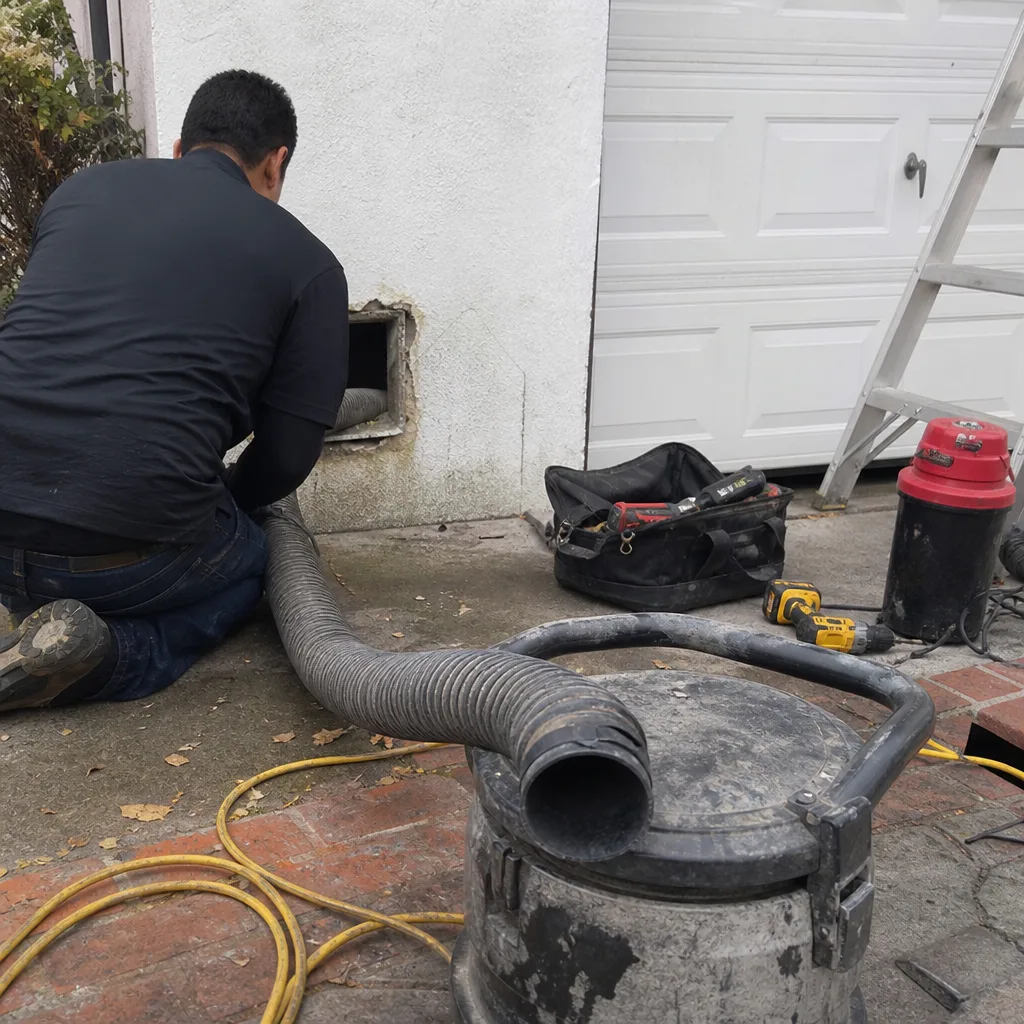
- Skipping the dryer vent. Dryer vent lint is a separate duct system with its own fire risk, and it doesn’t get cleaned by an air duct cleaner. If you smell hot lint in the laundry room, that’s a dryer vent cleaning call before it’s anything else.
- Hiring a cleaner who can’t fix what they find. If the cleaning reveals separated flex and the provider has to refer the repair out, you’re coordinating two contractors for one problem. Our duct repair and sealing is in-house for exactly this reason, and we’d rather you ask any provider “can you fix a leak if you find one, in the same visit?”
See the difference
 Before
 After
 Before
 After
 Before
 After
When to Call a Professional
Call a professional when a symptom persists across a filter change and a couple of weeks, when the smell is hot or burning rather than musty, when one room’s temperature problem survives a closed-door test, or when a visual inspection of the vents shows visible buildup on the register slats or at the return grille. Also call when you’re moving into a home and don’t know the last time the system was cleaned – especially if it was a rental with a long turnover history. Air Duct Cleaning Encino offers free estimates in Encino – call (877) 492-1986. We answer 24/7, with fast dispatch from 7am to 7pm, Sunday through Friday. Estimates are free, the price is set per job by a written estimate, and the local pro who performs the work is licensed and insured as their state requires.
Frequently Asked Questions
You likely need cleaning if you see visible dust blowing from supply vents after the system starts, notice a dusty film returning to furniture within days of cleaning, or have contamination confirmed visually by an inspection (buildup at the register or return grille). A one-time dust puff after idle periods or a general “smells dusty” impression without any other sign is usually a filter problem, not a duct problem. Call (877) 492-1986 for an exact quote – estimates are free.
Cheap quotes are usually per-register prices calculated before anyone has looked at the system, and they often cover surface dust only, with the real cost arriving as add-on services once the technician is on-site. A professional-grade cleaning has to cover the supply and return runs, the air handler cabinet, and the filter housing, and has to use extraction equipment – our answer is Rotobrush and Nikro – that can dislodge and capture fine particulate in the same visit. Whole-system pricing agreed in writing before work starts is the honest way to quote. Call (877) 492-1986 for an exact quote – estimates are free.
It usually points to moisture somewhere in the branch serving that room: a wet filter, a dripping condensate pan that isn’t draining, a poorly insulated run that sweats, or a fitting that lets humid attic air into the supply. Cleaning may help with the smell, but the moisture source has to be corrected or the smell returns. If you’re seeing dark smearing dust along with a musty smell, ask for a moisture check, not just a cleaning.
Stop running the system and get it inspected. A hot, sharp, or burning smell from vents most often originates in the air handler – a failing blower motor, a loose belt, or an electrical issue – and cleaning does not fix any of those. If the smell accompanies a breaker trip or any visible smoke, shut the system off at the thermostat and treat it as an HVAC repair call, not a duct cleaning call.
It depends on whether the smell is surface particulate or absorbed into the duct lining. If it gets stronger when the system runs and fades when it’s off, it’s more likely surface particulate and cleaning plus filter replacement often helps. If it’s constant with the fan off, it’s more likely absorbed, and cleaning alone may not fix it – sanitizing treatment of soft materials and sometimes replacing sections may be needed. Call (877) 492-1986 for an exact quote – estimates are free.
Most homes don’t need it on a fixed schedule. A reasonable rule of thumb is to clean when there’s a concrete reason: a recent renovation, a wildfire smoke event, a new-to-you home with unknown history, a confirmed visual problem, or a health or allergy concern that improves when you’re away from home. Homes with pets, heavy carpet, or a smoker in the home tend to accumulate faster than homes without. If you’re unsure, call for a visual inspection first – the answer might be “not yet.”
It’s more often a duct sealing or balance problem than a cleaning problem. Leaks in branch runs, crushed flex duct under flooring, missing dampers at the plenum, and return path deficiencies are the usual causes. A closed-door test and a supply volume check will usually tell you which one before you call. Cleaning improves air quality, but it doesn’t fix a leak. Our repair and sealing work is done in-house, and a full air duct cleaning visit is the right time to find and fix those leaks. For a deeper look at the components a cleaning should cover – including the air handler itself – see our guide to HVAC cleaning.
The Bottom Line
Read the warning sign, not the headline. Dust that returns within days, a musty smell that survives a filter change, a room that’s consistently off-temperature, or a heat-event smoke smell that’s still there a season later: each of those is a specific diagnosis, not a generic “your ducts are dirty” signal. If a provider tells you the diagnosis before looking, that’s the warning sign that matters most. Cleaning is the right fix when the problem is surface contamination. Sealing is the right fix when the problem is leaks. Sanitizing is the right fix when the problem is biological or absorbed contaminants, and only after cleaning. Knowing which is which is what this guide is for. When you’re ready for a real inspection, call Air Duct Cleaning Encino at (877) 492-1986 for a free estimate. We answer 24/7. Fast dispatch from 7am to 7pm, Sunday through Friday. The estimate is free, the price is set per job by a written estimate, and before-and-after photos of your own ducts document what was actually done.
Written by the team at Air Duct Cleaning Encino.